A magnitude 5.7 quake damaged shops across central Japan. Officials warned of possible strong aftershocks, especially over the next two to three days.
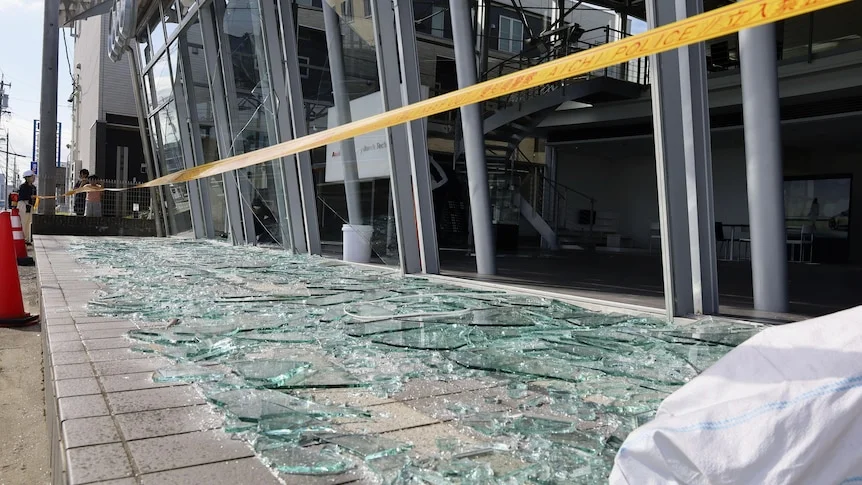
Damage across central Japan and a warning to prepare for further shaking put residents on alert after a magnitude 5.7 earthquake struck Shizuoka Prefecture early Sunday. At least 22 people were injured, according to local media, as people fled buildings and debris fell inside shops. The reported injuries point to a familiar danger in earthquakes: harm can come from hurried movement and objects inside buildings, even when a report doesn't describe widespread structural collapse. The early hour may also have left people scrambling to understand what was happening before they could get outside or check on others.
The Japan Meteorological Agency recorded the quake at magnitude 5.7; the US Geological Survey reported magnitude 5.5. It struck at 1:04am local time, about 40 kilometres beneath the surface. Smaller aftershocks followed. Differences between agencies' magnitude estimates are common because they can use different data and methods, so the two figures don't necessarily indicate a disagreement about whether the earthquake occurred. The reported depth gives another part of the picture, but it doesn't by itself tell residents what damage to expect at a particular location. For people nearby, the practical issue is that more shaking followed the initial event.
Damage and disruption across the region
The shaking affected areas around Aichi, Shizuoka and Gifu, as well as Kyoto, Nara and Yamanashi, home to Mount Fuji. Shizuoka and Aichi are neighbouring prefectures. The quake was not felt in Tokyo. That spread shows why the experience of an earthquake can't be reduced to a single city or prefecture: conditions can vary across a wide area, and residents may face different local risks even when they felt the same event. Tokyo's lack of reported shaking offers a useful boundary to the account, but it doesn't make the disruption elsewhere any less consequential.
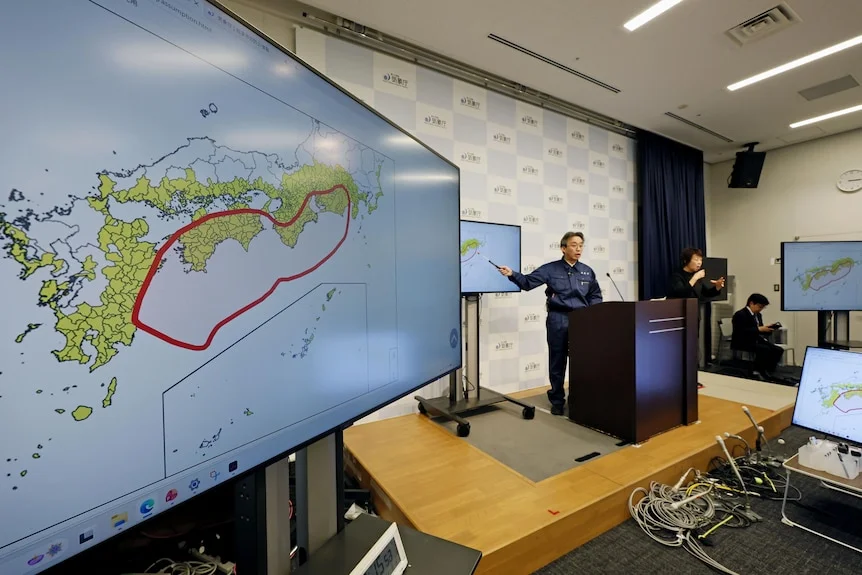
Experts warned residents of the possibility of more earthquakes in central Japan this week. (AP: Kenzaburo Fukuhara)
Television footage showed shattered shop windows and glass across streets. In a bookstore, books had tumbled from shelves. Some injuries resulted from people falling on stairs as they tried to escape. Those scenes are a reminder that everyday interiors can become hazardous when people move quickly: loose items can fall, glass can break, and stairs can become crowded. The accounts also give a more immediate measure of disruption than the magnitude alone. The numbers here are underwhelming only if the focus stays on the instrument reading; for residents, scattered debris and falls are concrete consequences.
Shinkansen services in affected areas ran at reduced speeds as a precaution, since earthquakes can damage rail lines. The move underscores how even a quake that left Tokyo untouched can disrupt transport across a broad area. Rail operators have to account for the possibility of damage before normal speeds can be treated as safe, and that caution can affect journeys beyond the places where damage is visible. Reduced speeds are a practical response to uncertainty, though the source doesn't say how long the restrictions lasted or how many passengers were affected. If you're travelling through the region, service changes can matter even when your destination hasn't reported direct damage.
Officials urge vigilance
The meteorological agency warned that strong quakes could occur during the coming week, with the next two to three days a particular concern. Agency official Ayataka Ebita urged people to watch for mudslides, falling rocks and risks from rainfall. That advice widens the focus from shaking itself to what it can set in motion around the affected communities. Slopes and loose material can pose hazards after an earthquake, while rainfall can add another concern for people deciding when and where it is safe to move. The warning is a prompt to stay alert, not a claim that further damage is certain.
Ebita said officials had detected no apparent change in the Nankai Trough plate, where scientists say a major earthquake could occur. Residents were also urged to keep basic supplies such as bottled water, food and batteries, and to have a plan for taking shelter. Those messages serve different purposes: the statement about the plate describes what officials had observed, while the preparedness advice gives households steps they can take amid uncertainty. It doesn't amount to a prediction about when a larger earthquake will happen. Here's the thing: a clear distinction between current observations and general preparedness advice helps keep the warning in proportion.

A book store employee had to clean up after the earthquake in Toyota in Aichi Prefecture. (AP: Kyodo News)
What the next few days will show
With aftershocks already reported and transport operators taking precautions, the next several days will test how quickly the affected communities can assess damage and respond to further shaking. That work includes checking buildings and transport links, clearing debris and keeping residents informed as conditions change. The source provides no final account of damage or service disruption, so the scale of the earthquake's longer effects remains unclear. For now, the immediate story is a regional emergency being managed under a warning that more shaking is possible. Still unsettled.
Discussion
Sign in to join the discussion.