England beat Australia 45-22 at Twickenham, scoring seven tries to extend the Wallabies’ losing streak and expose defensive problems ahead of their Scotland test.

England expose the Wallabies’ defensive fault lines
England’s 45-22 win at Twickenham was more than a heavy defeat: it was Australia’s third loss in a row and ended its hopes of reaching the Nations Championship final. England scored seven tries and retained the Ella-Mobbs Trophy, extending a run that has seen it beat the Wallabies in 12 of their past 14 meetings. The margin was England’s biggest score against Australia.
Harry Wilson’s post-match explanation was blunt. “England put us under the pump,” he said. “We weren't physical enough, we didn't slow their ball down, we were just playing from behind.” That diagnosis fits a match in which England’s pressure repeatedly turned into points. The scoreline is stark; the more troubling question for Australia is how quickly it fell behind and how little control it found.
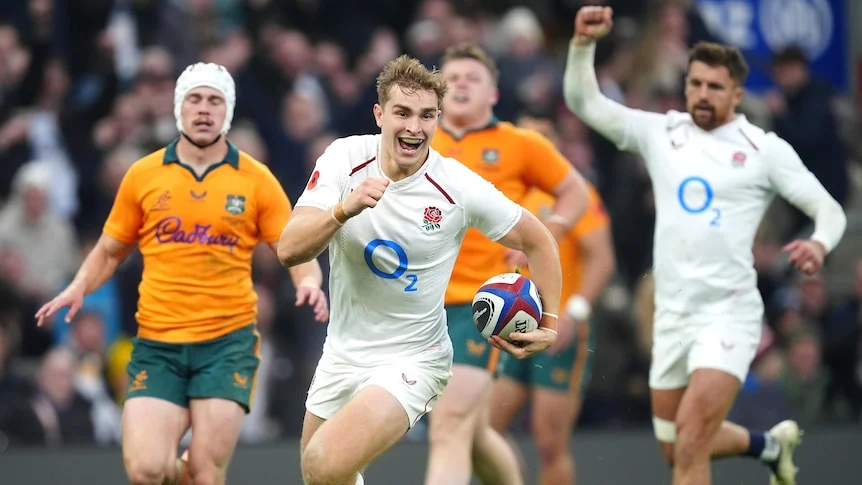
A brief foothold before England pulled away
England appeared to score inside two minutes, but the TMO ruled the try out for a forward pass. The reprieve barely lasted: Jamie George opened the scoring by powering over from a rolling maul. Ryan Lonergan’s penalty kept Australia in touch, but England struck twice in the 15 minutes before half-time. Ollie Chessum finished a move on the left, then Joe Heyes drove over from another catch-and-drive.
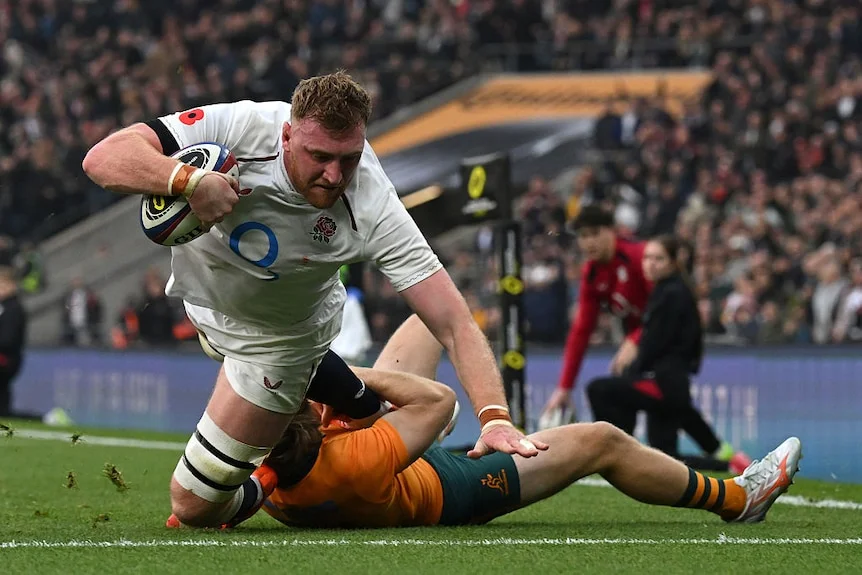
Australia was down to 14 after Angus Bell was sin-binned for a hip-drop tackle on Immanuel Feyi-Waboso. Even so, the Wallabies found a lifeline just before the break when Max Jorgensen intercepted and scored, cutting the gap to nine. It was a fine try, and perhaps a reason for some supporters to hope the second half might look different.
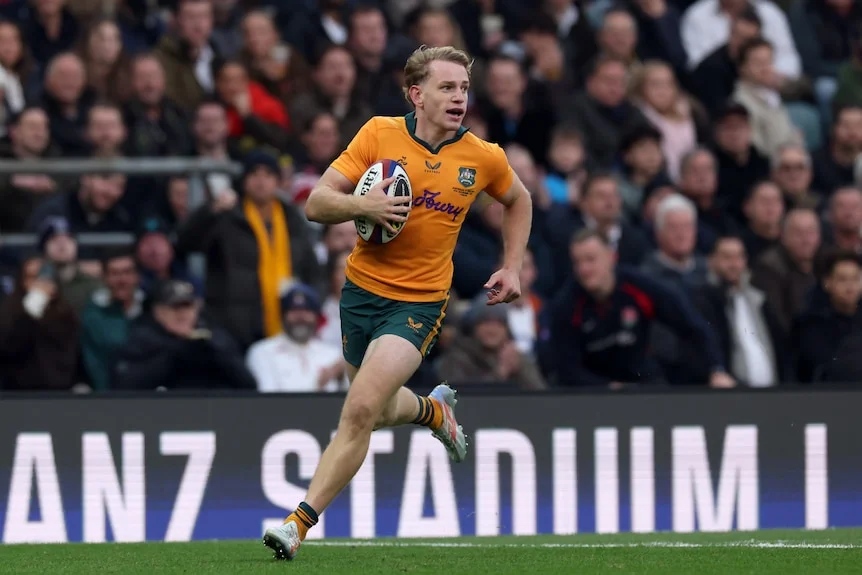
That hope lasted two minutes. Jack van Poortvliet broke through soon after the restart, and Henry Pollock added two quick tries after coming on as a winger. Australia did produce a brighter passage: replacement flyhalf Ben Donaldson helped move the ball quickly enough for Filipo Daugunu to score, and Jeremy Williams pounced on a Maro Itoje drop to narrow the deficit again.
But when Australia chased a bonus-point try, Ben Spencer intercepted Daugunu’s offload and ran clear to complete England’s seven-try performance. The Wallabies now head to Murrayfield to face Scotland, needing answers after another poor display.
“We've got seven days to just take some feedback from this game and make sure we're a lot better,” Wilson said. “Scotland are a really good team, we've got to be ready for it and take these harsh lessons.”
Look back on how all the action unfolded in our live blog.
Wallabies face another stern test in Scotland
The Wallabies’ performance against England was poor, and they have only seven days before their next chance to respond. Scotland await at Murrayfield, in a match expected to be just as difficult. That quick turnaround leaves little time to dwell on the defeat. Australia will need to show they can put it behind them and compete with a side that presents another tough challenge. The live blog also pointed readers to the England–Wallabies match statistics, though the embedded stats aren’t visible in this fragment.Australia left searching for answers
Les Kiss sounded furious as he tried to explain Australia’s performance. His bluntest point was that the Wallabies had fallen into bad habits early, playing too narrowly in the first half. They improved after the break, he said, but gave themselves too much ground to make up.
England, meanwhile, made better use of the field. Kiss said Australia struggled to reach the “A zone” and sometimes overplayed, while England were clinical and repeatedly turned good positioning into pressure. That diagnosis points to a problem beyond execution: Australia need to make smarter choices before the match gets away from them.
The Wallabies head to Murrayfield next week with seven days to respond. Kiss said they train well, but the challenge is carrying that work into an 80-minute performance. The gap between preparation and match day is now the question they have to answer.
Itoje sees promise, with work still ahead
England captain Maro Itoje was delighted, saying the team was beginning to show its ability and bring its talent together. But he was careful not to call the job finished: England are in a good place, he said, and need to build from here. The win gives them a platform; what they do with it will matter more.
Discussion
Sign in to join the discussion.