Higher food and operating costs are squeezing Manila street vendors, who are raising prices, changing recipes or seeking extra income as demand weakens.

For street vendors in Metro Manila, inflation is showing up in small, difficult choices: replace beef with pork, accept thinner earnings or risk losing customers by raising prices. Each decision protects one part of a fragile business while putting pressure on another.
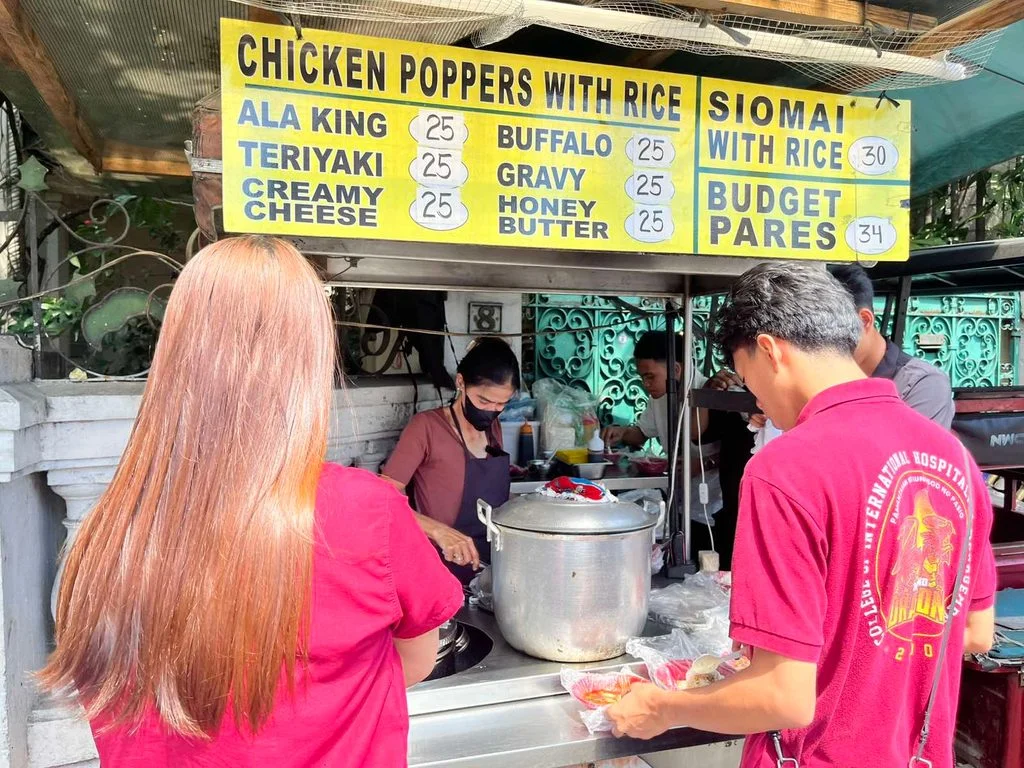
Leah Lobrigo, 48, works six days a week at a budget-meal cart on Alcalde Jose Street in Pasig City, near schools, hospitals and other businesses. She spends 12 hours a day selling meals, including pares: braised beef served with rice and a bowl of broth. A dish once priced at P30 now costs P34, and the recipe has changed too. Her employer has substituted crispy pork belly, or lechon kawali, for the more expensive beef.
“Customers understand,” Lobrigo told Rappler in Filipino. “They know how difficult life is, especially now that the prices of goods have gone up again.”
Every adjustment carries a risk
The pressure extends beyond the ingredients in a single meal. The Philippines’ inflation rate reached 7.8% in October, amid higher fuel, electricity and transport costs. Food inflation eased overall, but rice inflation climbed to 20.7%, its highest level in more than two years. Those costs affect both vendors’ households and the businesses that supply their customers’ meals.
The near-term outlook adds another concern. El Niño is considered very strong, and widespread drought is expected in early 2027. If prices keep rising, Lobrigo fears the cart’s expenses will climb again. Another price increase could help cover costs, but it may also send customers elsewhere.
That trade-off shapes the economics of low-cost street food. Vendors serve customers who are themselves watching every peso, so passing along higher costs can quickly affect demand. Yet keeping prices fixed can leave less money to cover supplies, household bills and the next day’s work.
Lobrigo describes the cart as if it were her own business, even though she has a boss. Strong sales lift her mood; weak sales feel different. That personal stake is tied to a fixed daily income of P660 and a household to support. She is a single mother, and three of her five children are still in school.
Lower sales are changing the workday
Ronald Piedad, 39, sells kakanin, or Filipino sweet rice delicacies. On a typical day, he earns between P500 and P700. He buys his products from a shop in Novaliches Bayan, in northern Quezon City, then pedals his cart roughly 12 kilometers to a spot on Panay Avenue beside the stairs to the southbound Quezon Avenue station on Metro Rail Transit Line 3.
The long trip was a response to competition closer to home. Piedad said too many sellers in his original area had made sales slow, even when he went door to door. The new location offered another chance to earn, but he has also seen customer numbers fall there.
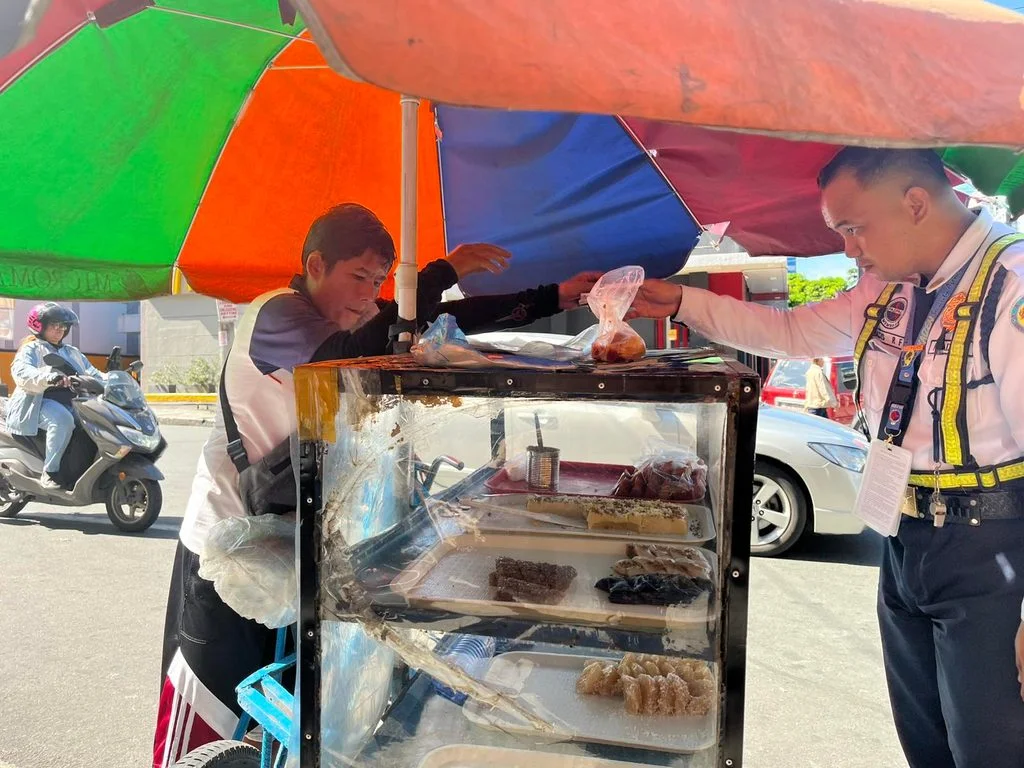
“Things have really changed,” he said, suggesting that people are tightening their belts. To bring in more money, he also makes and sells palitaw, flat rice cakes. But the ingredients and fuel needed for that extra product have become more expensive: glutinous rice flour, coconut, sugar and liquefied petroleum gas.
Higher costs leave Piedad considering a price increase of his own. He frames his goal in basic terms: feed his family three times a day, pay rent and keep them from being forced out of their home. “I’m not dreaming of becoming rich,” he said.
Holding prices can mean absorbing the squeeze
At a cart beside Piedad’s, Mark Ferrer, 32, sells skewered street snacks known as tusok-tusok. Fish balls, kikiam and squid balls cost P20 per stick; kwek-kwek, made from battered and fried quail eggs, costs P25. Ferrer said his boss has kept prices steady to avoid losing sales.
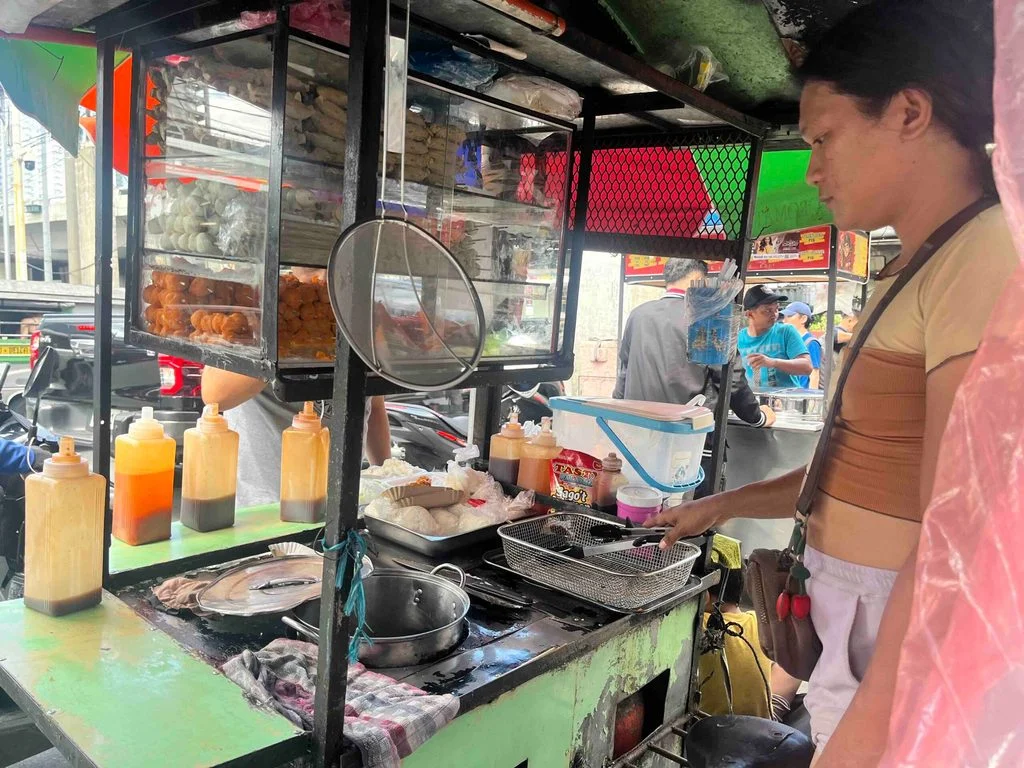
Ferrer receives 15% of the cart’s daily profit. On a good day, his income can reach about P1,000. Rain or a suspension of classes can bring it down to P300. Those swings already make earnings uncertain, and he is watching the forecast for a very strong El Niño with concern about what it could mean for his livelihood.
“You just have to persevere to earn money,” Ferrer said. “You have to try your luck out in the streets. You can’t do something bad just to put food on the table.”
Extra work fills the gaps
Lobrigo is also looking beyond the food cart. Sunday is her only day off from selling meals, but she uses it to take on housekeeping jobs when called. She is considering selling dried fish as another source of income.
“Our peso practically has no value now,” she said, adding that her wages would go further if basic goods were cheaper. Her response reflects a familiar bind for informal sellers: more work may help make up for the rising cost of necessities, but it also takes time and energy from an already long working week.
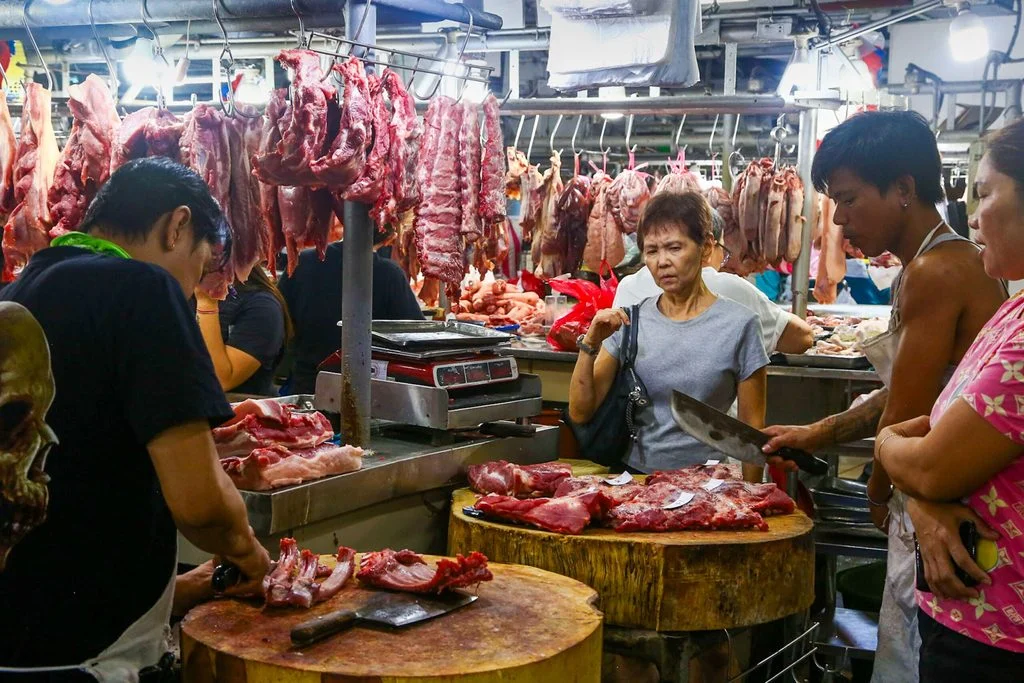
The Department of Agriculture has warned that a weaker peso may raise the cost of imports such as rice, fertilizer and other farm goods. President Ferdinand Marcos Jr. urged the public not to panic after the peso hit historic lows, saying the government was “doing everything” to keep prices down.
For the vendors in Pasig and Quezon City, the immediate test is more concrete: whether enough customers keep buying when meals cost more, and whether sales can cover the ingredients, fuel and transport behind each day’s work. Their options are already visible in the choices they describe: adjust the recipe, raise prices, hold them steady or find another job. What happens to demand as costs continue to shift will shape which of those choices remains viable.
– Rappler.com
Discussion
Sign in to join the discussion.