At Mt. Camisong, a chef and artist pair imaginative paintings with local ingredients, inventive dishes and a shared effort to reduce waste.

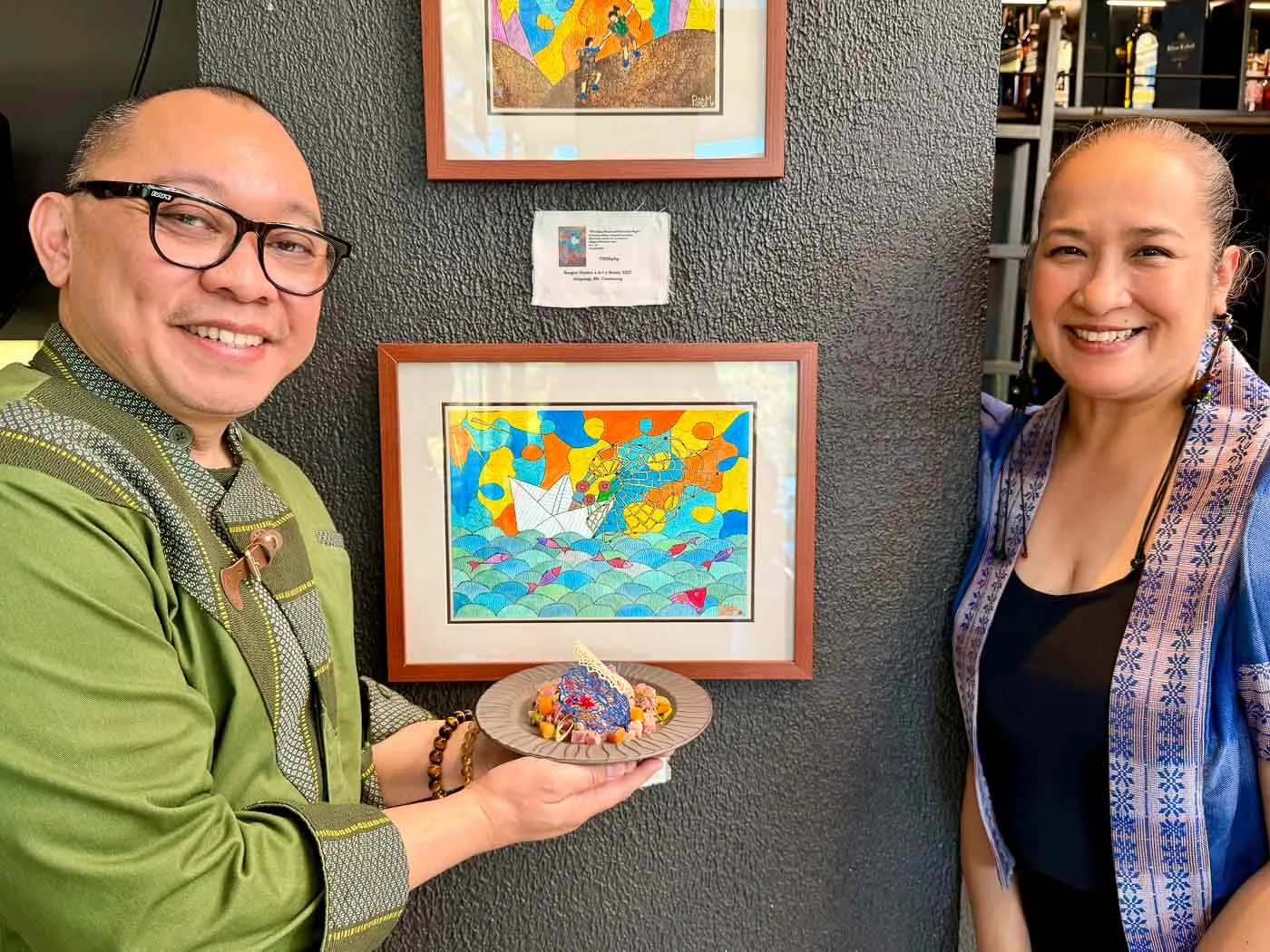
The most memorable pairing at Mt. Camisong Forest Park began by accident. Chef Stanley “Stan” Suva recognized a dish he’d cooked years earlier in a painting by Amparo Moldero-Magallanes: a paper boat caught in a fishing net, surrounded by fish and waves. Neither had made the work with the other in mind. Their surprise at the resemblance captures the appeal of this year’s Gastro X Art program: food and visual art can find common ground before their makers plan a connection.
For the ninth Ibagiw Creative Festival, Suva, Mt. Camisong’s vice president for food and beverage, and Baguio artist and apothecary Moldero-Magallanes have created Roots in Transformation. The project is part of Ibagiw 2026, whose theme, RIKUS: A Creative Circular Baguio, centers on sustainability, renewal and the reuse of materials. At Alapaap Dining, the idea reaches beyond matching a plate to a painting. The pair’s work connects local ingredients, kitchen decisions and an artist’s return to her practice.
Unexpected ingredients, familiar references
The meal opens with kilawin, a Filipino dish made more intriguing by the addition of camote. Its sweetness and texture soften the dish’s acidity, creating a combination that feels considered without losing kilawin’s familiar character. It arrives beside Of Dreams Cast at Sea, Moldero-Magallanes’ watercolor-and-ink scene of fish, swirling waves and a paper boat held in a net. The visual connection to Suva’s earlier dish is what first caught his attention, even though the two works developed independently.
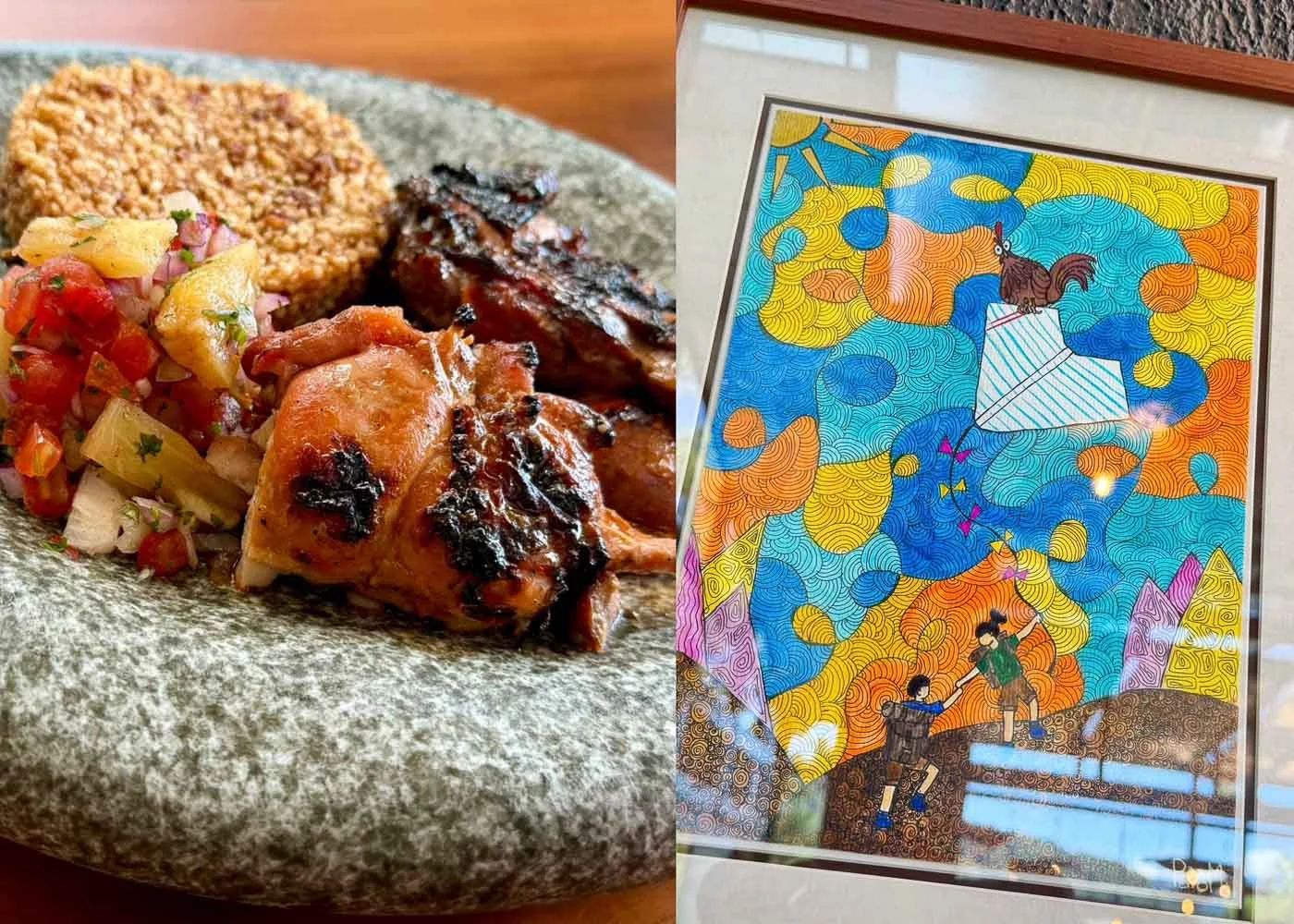
A second pairing looks to a different Filipino staple. Suva serves Pinoy Chicken BBQ with smoked pineapple salsa and a crisp take on tutong, the browned rice at the bottom of a pot. Here, the idea becomes Pinoy ampaw, made with Unoy heirloom rice from Pasil, Kalinga. The crunchy rice adds contrast to the chicken and salsa, while the dish draws on Of Crispy Steps and Borrowed Flight. The illustration brings together children, a paper boat and a chicken amid swirling colors and mountain forms.
Then comes the dish that gives the meal its most striking local turn: strawberry cansi. Traditionally associated with Western Visayas, the beef soup gets its sourness from batwan. Suva’s version brings Benguet strawberries into the broth, balancing its tang with the fruit’s sweetness. The result is an unusual combination that works—and invites another spoonful.
The choice of berries also reflects the kitchen’s effort to make better use of ingredients. Suva has said the restaurant uses underripe strawberries, which are less suited to desserts, in the cansi. It’s a practical approach that gives those berries another purpose. Moldero-Magallanes’ companion painting, Of a Strawberry and a Floating Cow, gives the pairing a playful visual echo, with a strawberry hanging beneath a dreamlike scene of clouds, mountains and a floating cow.
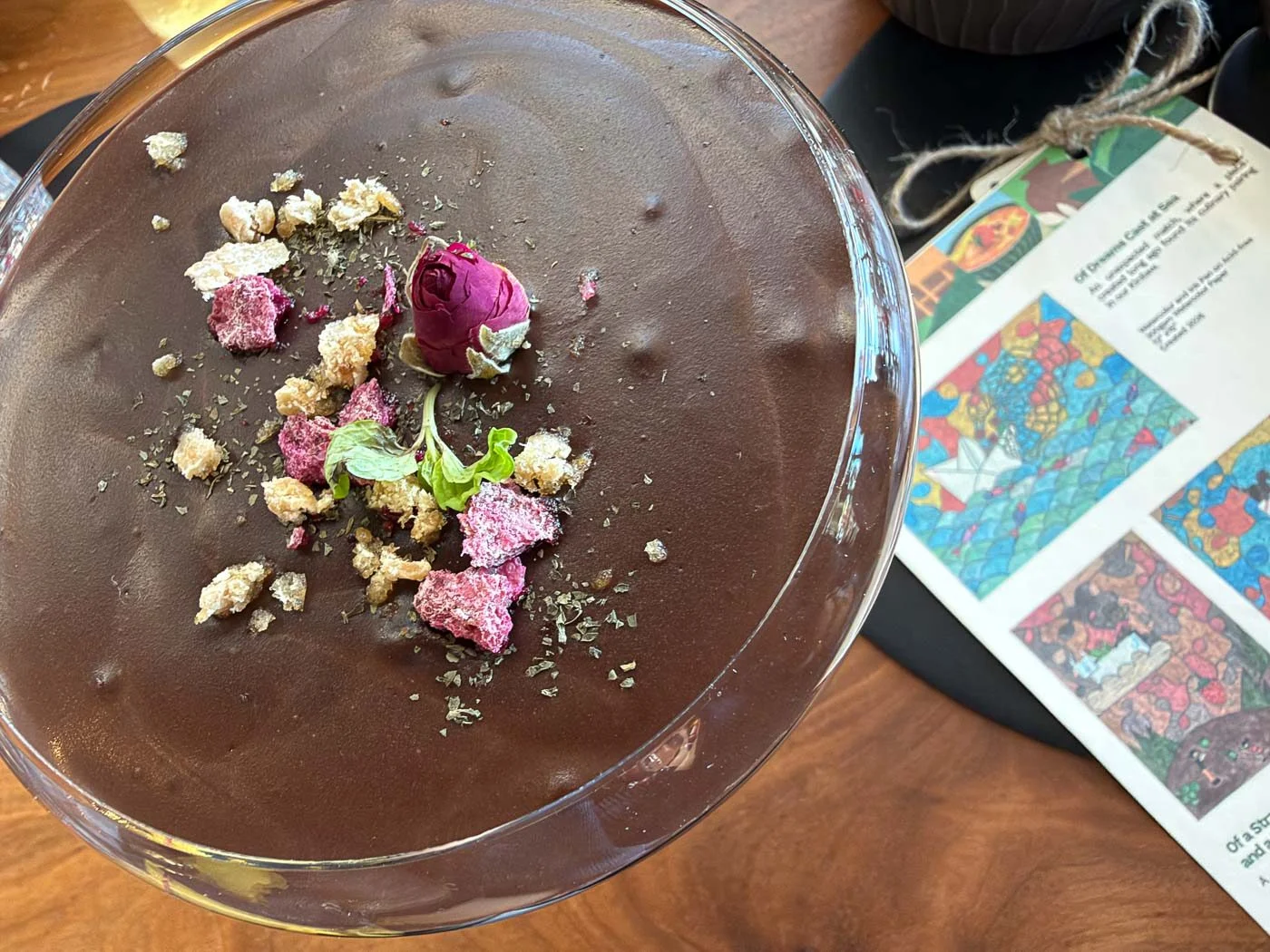
Dessert shifts the focus to texture and aroma. Suva’s chocolate mousse includes a rose element that brings freshness to the richness of the chocolate. It’s paired with Of Leather Towers and Sweet Rivers, and the dessert’s layers of mousse and fruit leather recall the painting’s towers and flowing shapes. Each course gives diners a reason to look again: the painting can sharpen the experience of a dish, while the food gives a familiar image a new association.
Materials find a second life
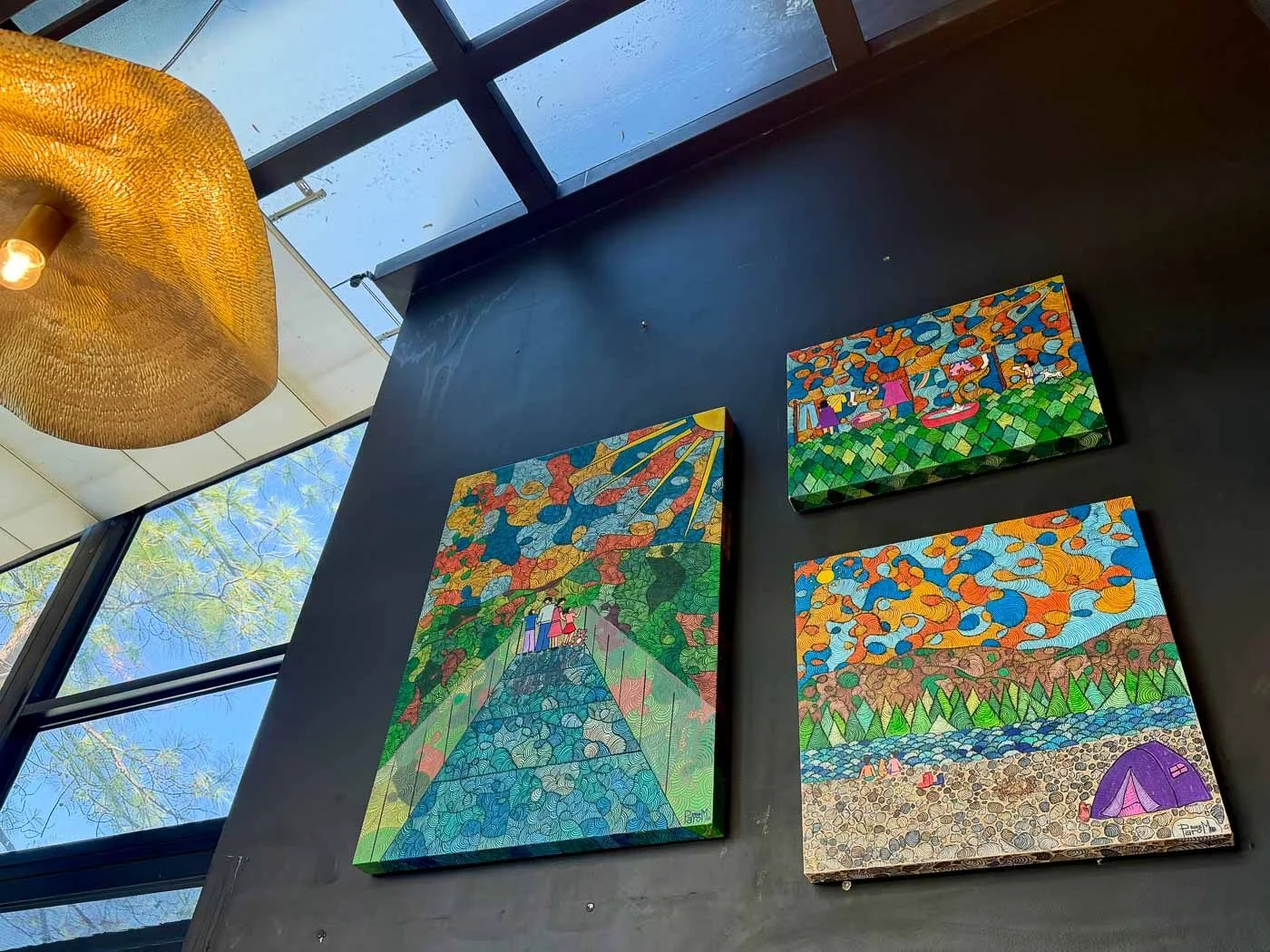
The paintings have a story of their own. Moldero-Magallanes grew up with artist parents and began painting as a child, but work and other responsibilities gradually pushed art to the margins. Her images continued to appear on packaging for products from her small business. When she reached her golden years, she decided to return to painting and share more of her work.
She describes her style as whimsical and dreamlike, shaped by her parents’ influence and by a wish to bring viewers back to simpler, happier memories. For Roots in Transformation, that creative return also meant finding new uses for materials that might otherwise be discarded. Expired Abra dyes became watercolor palettes; rejected soap-making materials were turned into paint. She added old glitter dyes to acrylics and repurposed existing canvases.
Her training in medical technology, Moldero-Magallanes said, helped develop the resourcefulness and willingness to experiment behind those choices. That approach gives the festival’s circularity theme a material form: the paintings don’t only represent renewal; some of their supplies have been renewed, too.
She has long seen chefs as artists. Their craft, in her view, is about more than appearance: taste, texture and memory can make a meal an experience. A dish may call to mind a mother’s cooking or a particular moment in someone’s life. Seeing Suva recognize his old kilawin in her painting gave that idea a personal example.
Creative exchange with a practical purpose
Suva also treats cooking as artistic expression, with ingredients and techniques playing a role much like an artist’s materials and tools. Learning how Moldero-Magallanes reused supplies resonated with work already under way in his kitchen to reduce food waste and find more uses for available ingredients. The collaboration connects those efforts through a meal guests can experience directly.
Mt. Camisong board chairperson Ludette Querubin has described sustainability as ongoing work, with room to learn and improve through relationships with artists, chefs and the surrounding community. Her view reaches past environmental concerns to include food, culture, livelihoods and the people behind these efforts. In the Cordillera, where making use of available materials is part of everyday life, that wider definition gives the festival’s theme a local grounding.
There’s also a case here for bringing creative work into places where people already gather. Restaurants can introduce diners to artists and their stories; artists can encounter new audiences through food. Chefs, in turn, can make local ingredients and cultural references part of a shared experience. For such pairings to sustain that exchange, artists need meaningful recognition and support alongside the exposure.
A meal that rewards attention
Gastro X Art’s return to Ibagiw makes a persuasive case for continuing the format. Suva’s dishes are enjoyable on their own, but learning what connects each one to its painting changes how both are experienced. The art feels at home in the dining room, and the food carries its own ideas rather than serving as a backdrop to an exhibition.
Sometimes the link comes through a deliberate pairing. Sometimes, as with the kilawin and Of Dreams Cast at Sea, it emerges by chance. That openness is part of the project’s appeal: a meal can hold its own and still leave room for discovery.
Roots in Transformation runs from November 8 to 30, 2026, at Alapaap Dining in Mt. Camisong Forest Park, Sitio Peday, Barangay Loacan, Itogon, Benguet. It’s part of the Ibagiw Gastro X Art + Live Music Creative Crawl. Take time with the paintings and the stories behind the plates. The strawberry cansi, especially, deserves a slow first taste—and a second bowl.
Discussion
Sign in to join the discussion.