Fourteen years later, Abbott calls Gillard’s speech a powerful political moment but says its accusations of sexism were unfair.
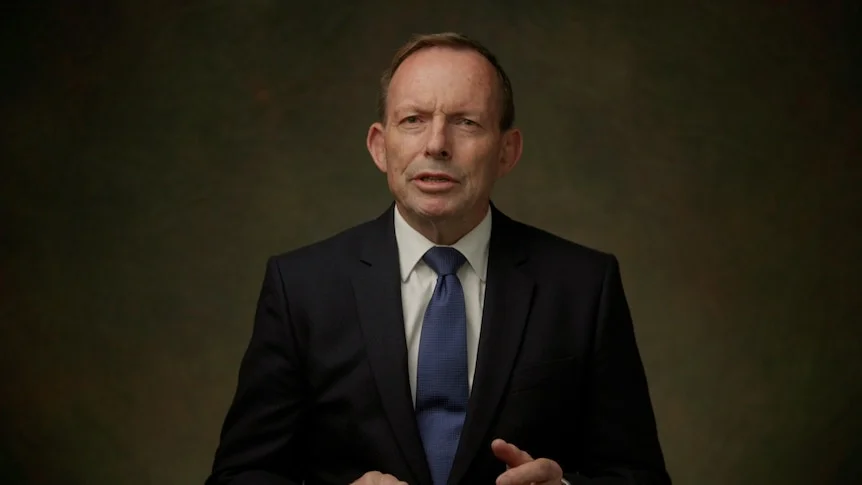
Tony Abbott still disputes the charge at the heart of Gillard’s landmark speech
Fourteen years on, Tony Abbott remembers Julia Gillard’s misogyny speech as an “unjustified attack” that he never expected to become an iconic political moment. That gap between his view of the speech and its lasting impact is the story: Abbott concedes it was powerful theatre, but says its accusations went too far.
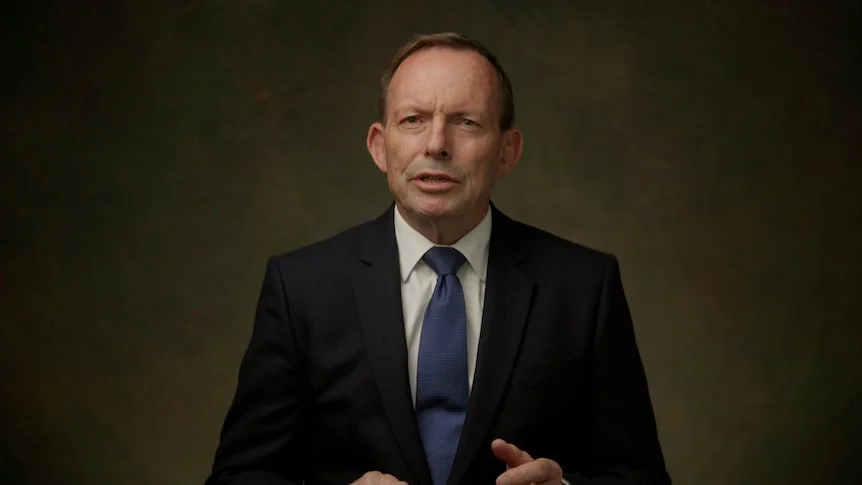
Abbott called Gillard’s speech a “politically powerful piece of drama”. (ABC/Docker Media)
Speaking on ABC iview’s I Was Actually There, Abbott said he and Gillard had known each other for years and once shared mutual respect. By the time she rose to speak, he said, that respect was “fraying”. He recalled thinking she was going “over the top” and described her speech as a “pretty over the top and unjustified attack”.
Abbott maintained that he had never treated women differently because they were women, or treated them as lesser. He said Gillard listed conduct he regarded as old-fashioned, ham-fisted and insensitive, but argued most of her charges were unfair or exaggerated.
Gillard recalled feeling calm as she spoke, and said the reaction in the chamber made her feel she was dominating the room. She knew she would face attacks over the controversy surrounding Labor’s chosen Speaker, Peter Slipper. Although she delivered the speech off the cuff, she had asked her team to assemble Abbott’s “most sexist quotes” for her to draw on. She described him as “almost, you know, rent-a-gaffe about sexism issues”, adding that she was ready to answer each charge with another example.
A speech shaped by the Slipper controversy
The immediate dispute was a motion from Abbott accusing the government of sexism and misogyny for installing Slipper as Speaker and then refusing to remove him. A Liberal MP, Slipper had taken the role in part to help Labor, then a minority government, maintain its numbers in the House of Representatives.
Pressure to remove him grew after former staffer James Ashby accused Slipper of sexual harassment. Reports also emerged that Slipper had sent Ashby offensive, sexist text messages about female genitalia. The government’s decision to keep him in the chair invited charges of double standards.
Slipper resigned as Speaker after being accused of sexual harassment by Ashby. The text messages sent to Ashby included highly offensive references to female genitalia.
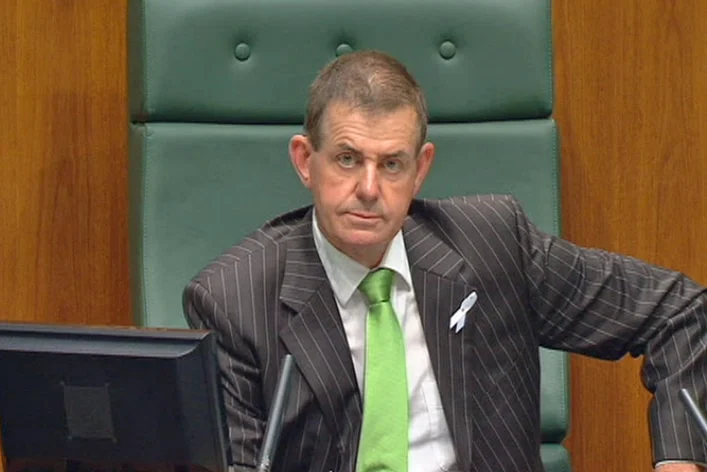
The Gillard government faced accusations of sexism for refusing to remove Slipper as Speaker. (ABC News)
Abbott framed Gillard’s speech as a political counterattack: “She was putting into practice the old doctrine that attack is the best form of defence.” Gillard, for her part, described feeling unfairness, resentment and anger at the prospect of being judged on sexism after years of gendered criticism herself.
Abbott acknowledged the speech’s theatrical force and political power. But he also argued that Slipper’s resignation by day’s end vindicated his position in parliament. That reading leaves out what made the speech resonate beyond the day’s parliamentary arithmetic: Gillard was answering a charge of sexism while pointing to the record of the man making it.
Another flashpoint was Abbott’s remark shortly before the speech that the Labor government should “already have died of shame”. He later called it “a bit of a niggle”, while defending it as a fair criticism of a government that had let itself down. The line echoed controversial comments by radio host Alan Jones, made after Gillard’s father died. Jones later apologised for those remarks.
Gillard said hearing Abbott’s words left her with “a kind of cool anger”. She said they spurred her response.
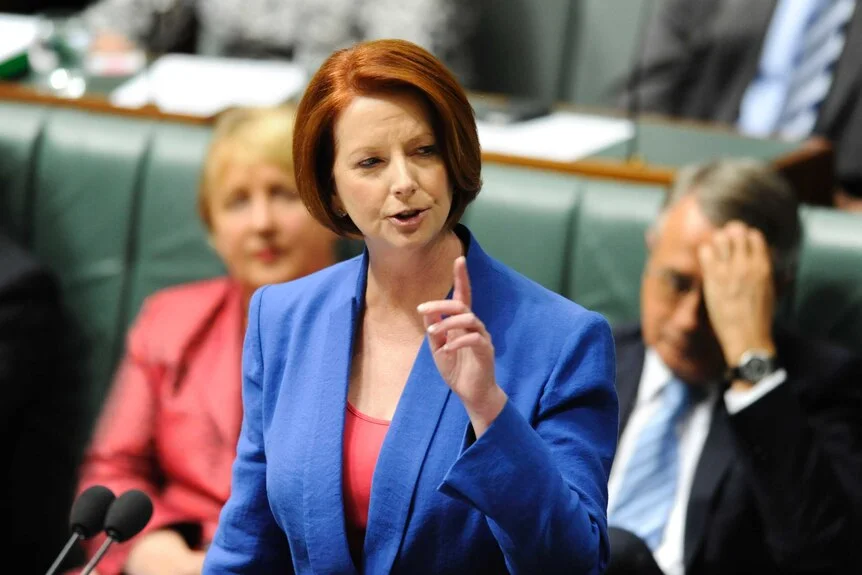
Gillard said she had not prepared the speech in advance. (AAP: Lukas Coch)
The speech’s legacy wasn’t obvious in the chamber. At first, the press gallery largely agreed with Tony Abbott’s view: Julia Gillard was using sexism to turn attention away from criticism over her government’s handling of the Slipper affair. But as the speech reached audiences around the world, it resonated as something larger.
An unexpected legacy
Abbott says he saw the speech as an effective parliamentary move, not the making of a feminist landmark. He later likened its rhetorical force to Helen Reddy’s “I Am Woman, Hear Me Roar.” That gap between what a speech is meant to do in the moment and what audiences make of it is the story here.
Gillard says she had previously avoided putting gender at the centre of public debate. The speech marked a turning point, she recalled, even though it came during an argument she described as an attempt to skewer her over sexism. In her words, “this day” gave her the moment.
People still bring the speech up with her, in Australia and overseas. Yet she has never watched it back. She wants to keep her own memory of the day, unshaped by seeing the video. That choice feels telling: the speech now belongs to millions of viewers, but the experience of delivering it remains hers.
We've got a story for you. Stream I Was Actually There free on ABC iview or watch Mondays at 8pm on ABC TV.
Discussion
Sign in to join the discussion.