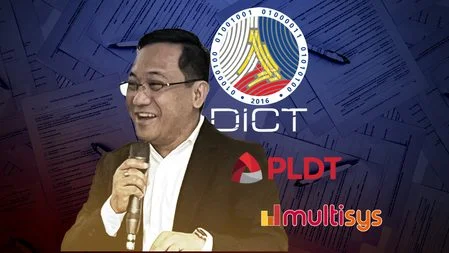
The November 5 protest’s scale is hard to predict, but recent tensions around the DICT could shape its return in the Philippines.

The Million Mask March has no predictable scale in the Philippines, but tensions around the Department of Information and Communications Technology (DICT) could give this year’s November 5 action fresh impetus. Whether that leads to street protests, online activity, or both remains unclear. The uncertainty is part of the event’s history: its name travels globally, while turnout and tactics depend on local grievances and the attention they attract. This year, the agency’s disputes offer potential material for protest messaging, though they don’t guarantee a visible demonstration.
A protest with a digital prelude
Launched by the hacking collective Anonymous in 2012, the global march takes place on November 5. It’s also called “Operation Vendetta,” a reference to V for Vendetta, whose central character wears a Guy Fawkes mask. The mask gives the action a recognizable visual identity, while the annual date gives supporters a shared moment to organize around. Early events drew larger crowds in cities such as London and Washington, DC, but that history doesn’t establish a reliable template for participation elsewhere.
In the Philippines, online defacements have often preceded the march, drawing attention to issues including corruption, police violence, and militarization. The 2013 action was a high point: more than 30 government websites were crashed or defaced. In a video, Anonymous apologized for the disruption while urging people to join the protest. Police sought to maintain public safety and invited some protesters for questioning. The episode showed how the march can combine public assembly with online disruption, though those tactics carry different risks and attract different kinds of attention.
Past actions have included hacking activity and website defacements ahead of the march, though activity has varied with the issues drawing public attention. That variation matters: a familiar annual label can make an action easy to recognize, but it can’t by itself produce sustained participation. Digital activity may also be more visible than the people organizing or joining a physical march, leaving the public with an incomplete picture of who is involved and what they want.
Why 2026 could draw attention
The 2025 march appeared quieter, with little media coverage beyond notices in online hacking communities. This year’s level of activity is anyone’s guess. Still, the DICT faces several sources of public scrutiny that could feature in protest messaging. A quieter year doesn’t settle what will happen next; it only makes clear that the march’s visibility can rise and fall with the issues circulating around it.
New secretary Robert Joseph de Claro, formerly head of the Social Security System, takes over an agency whose previous chief, Henry Aguda, resigned amid controversy over the temporary Discord ban and threats to restrict other services linked to the spread of nihilistic violent extremism. The episode appears to have weakened public trust in the department. For an agency responsible for information and communications policy, a dispute over access to online services can become a public test of how it explains its decisions and responds to criticism. That doesn’t mean the issue will drive a march, but it gives critics a concrete subject to raise.
Another pressure point is the preventive suspension of DICT eGov Undersecretary David Almirol over alleged conflicts of interest involving the eGov app and its development. That dispute could create an opening for hacker-activists or other actors to exploit uncertainty around the agency. The allegation and suspension are distinct from proof of wrongdoing; the political effect, however, can come from unanswered questions and competing accounts. This is more significant than it looks: public confidence in digital government services depends partly on whether people believe their development and oversight are being handled fairly.
No clear trigger has emerged for a major November 5 protest, and an informal march may not materialize. The date’s significance lies in bringing perceived injustices into public view; in the Philippines, that conversation can arise on any weekday. A rally is only one measure of whether a campaign has gained traction. Online posts, public debate, and news coverage can carry a message beyond the people who gather in one place, although visibility alone doesn’t show how much support it has.
What the uncertainty means
If you’re working in this space, the practical question is less whether the march will match an earlier high point than whether the DICT controversies become a shared focus for public criticism. Similar annual actions often depend on a clear grievance, organizers who can connect it to a broader audience, and a channel through which people can participate. Here’s the thing: the current disputes provide possible themes, but the source offers no evidence of a confirmed plan or an organizing campaign.
That said, the format leaves room for activity that doesn’t look like a conventional march. A protest might be small, mostly online, or absent from public view; each possibility would say something different about organization and attention. And yet, the date can still serve as a prompt to revisit questions about trust, public services, and government power online (and this is the part most people overlook). A focal point, even a brief one.
– Rappler.com
Discussion
Sign in to join the discussion.