Training has expanded, but Filipino embalmers still face low pay, limited representation and an unclear picture of how many licensed professionals are active.

Filipino embalming schools are training more students, and the work is gaining professional recognition. Yet the systems that govern the profession still leave basic questions unresolved: how many embalmers are actively licensed, who represents them in licensing decisions, and whether their pay reflects the demands of their work.
For Jonnel Cribello, a registered nurse who received his embalming license in 2009, the job also comes with a persistent social stigma. People often asked whether he had washed his hands before shaking theirs. He had once planned to become a surgeon, but chose embalming after learning about a training school. “If I wanted to work with the human body, the easiest route for me then was to work in the mortuary industry,” he said.
Cribello now directs a program and trains students at the Philippine College of Advanced Studies (PCAS) in Cebu. It is one of four active accredited embalming schools in the Philippines, and the only one outside Luzon. His career reflects an industry that has made strides in training while still working to improve its standing and conditions.
Professional recognition has moved faster than working conditions
Embalmers disinfect and preserve bodies, and restore their appearance so families can hold wakes before burial or cremation. Those wakes often last for days. The nature of the work has long shaped public perceptions, says James Patrick Ovejera, president of the Professional Embalmers Association of the Philippines Inc. (PEAP).
Ovejera recalls stereotypes of embalmers as uneducated, untidy workers hidden away in dark rooms. “There were even depictions in the movies wherein it’s a person that works in a dark place… a hunchback,” he said. The Department of Health (DOH) began efforts to professionalize the field around 2010, he said, helping to change that image.
The legal framework had existed for decades. Presidential Decree No. 856, issued in 1975, set out the Philippines’ sanitation code, including rules for handling the dead and operating funeral and embalming establishments. More detailed rules for embalmers arrived in 1996. They provided for a DOH Committee of Examiners for Undertakers and Embalmers (DOH-CEUE), responsible for licensing embalmers and accrediting schools.
In 2010, the DOH reinstated the committee and worked with the University of the Philippines to revise the curriculum and licensing exam under Administrative Order No. 2010-0033. The order also established minimum wage as the starting point for embalmer pay. Committee members and representatives from the five training schools then visited regions to explain the rules to local officials.
Those discussions helped shape further changes, including refresher training for embalmers whose licenses had expired and a Filipino language version of the exam. Previously, the test was in English. Ovejera, then a teacher at the Philippine Embalmers and Undertakers Review and Training Center (PEURTC), joined the outreach effort. “There are a lot of people [who] are very skilled coming from the provinces…but they couldn’t really understand English well,” he said.
In 2018, embalmers formed PEAP to give the profession its own association, alongside the Philippine Mortuary Association, which represents funeral home owners. “At the time, there was no collective body representing us, and we wanted to do something about that,” Ovejera said.
Training draws career changers and funeral home families
Current DOH requirements include a high school diploma, at least 140 hours of instruction at an accredited school, and evidence that the applicant has embalmed at least 10 cadavers within a year. Applicants then sit a licensing exam held twice annually, in March and September.
Rules revised in 2021 put license issuance under the DOH’s Health Facilities and Services Regulatory Bureau (HFSRB), following a passing score on the committee’s exam. Licenses last three years and may be revoked if they are not renewed within five years. Courses typically involve about two months of classroom instruction, followed by a month of practical embalming at partner funeral homes. Tuition ranges from roughly P27,000 to P30,000.
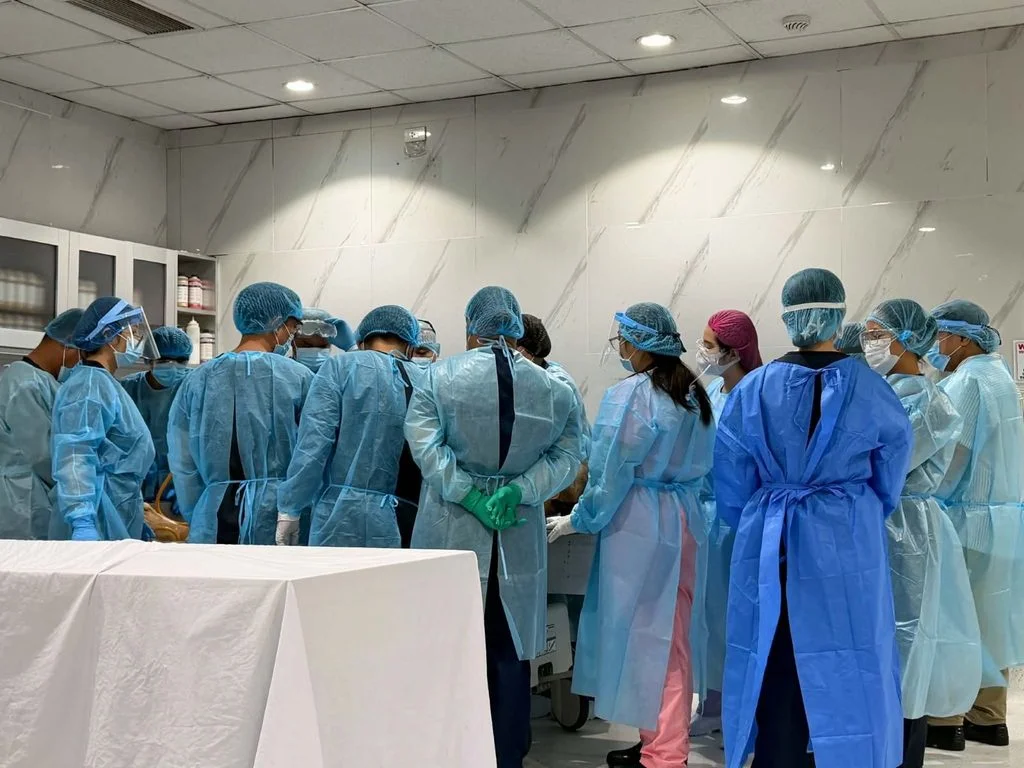
More than half of Cribello’s PCAS students have either worked in funeral homes or come from families that own one. The average student is around 45, and the oldest he has taught was 75. Returning to study after years away from school can be difficult, he said: “It’s such a unique challenge because people [are] going back to school after years of not having a good habit of reading or studying.”
Demand for training has grown. PCAS now runs two cohorts each year, with about 60 students in each, compared with 10 per cohort in 2009. PEURTC’s Manila classes generally have 40 to 60 local students. It also teaches groups of five to eight students from nearby countries, including Singapore, Thailand and Malaysia. Ovejera says affordability and English-language instruction help attract students from abroad.
Local practice reflects cost, climate and wake traditions
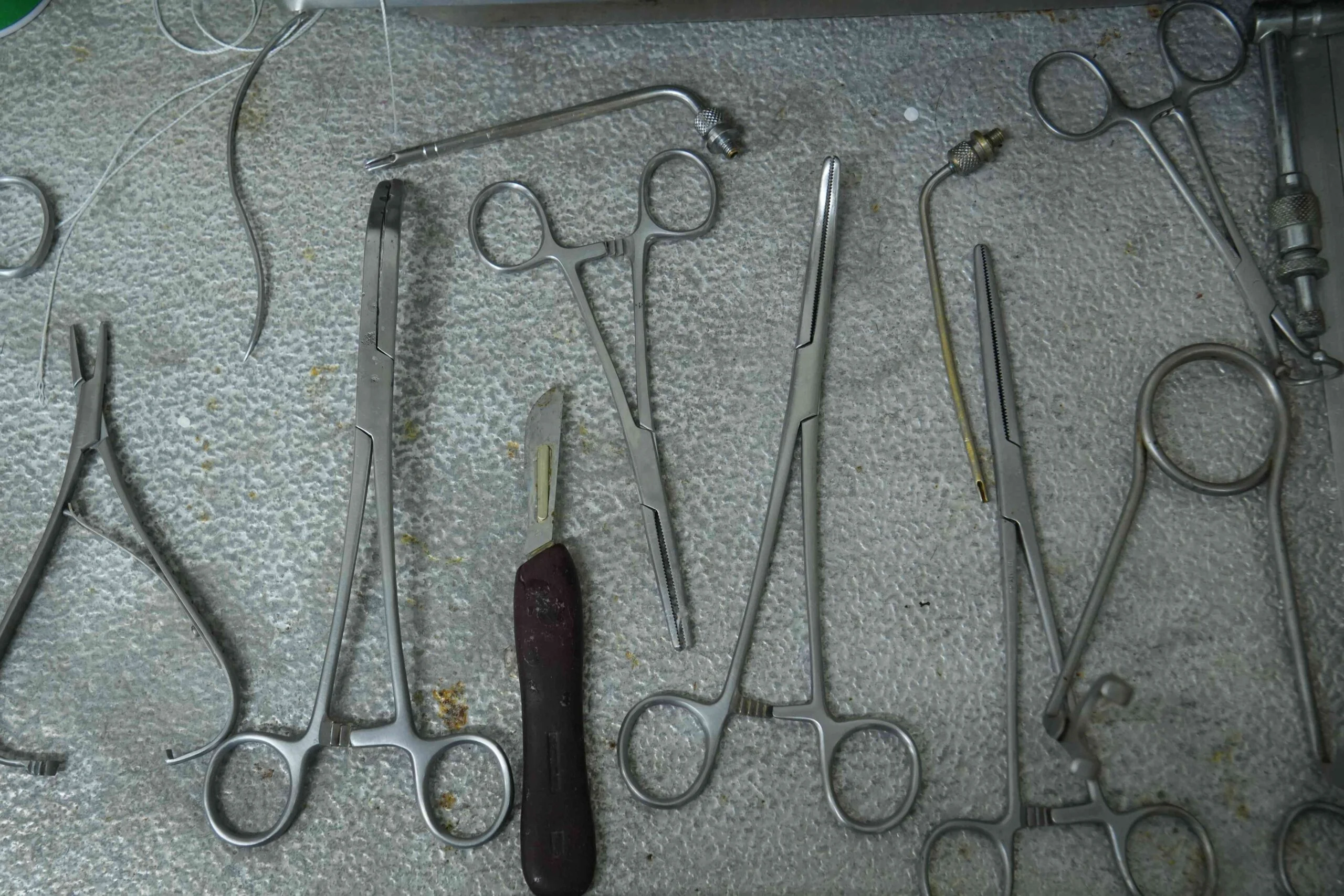
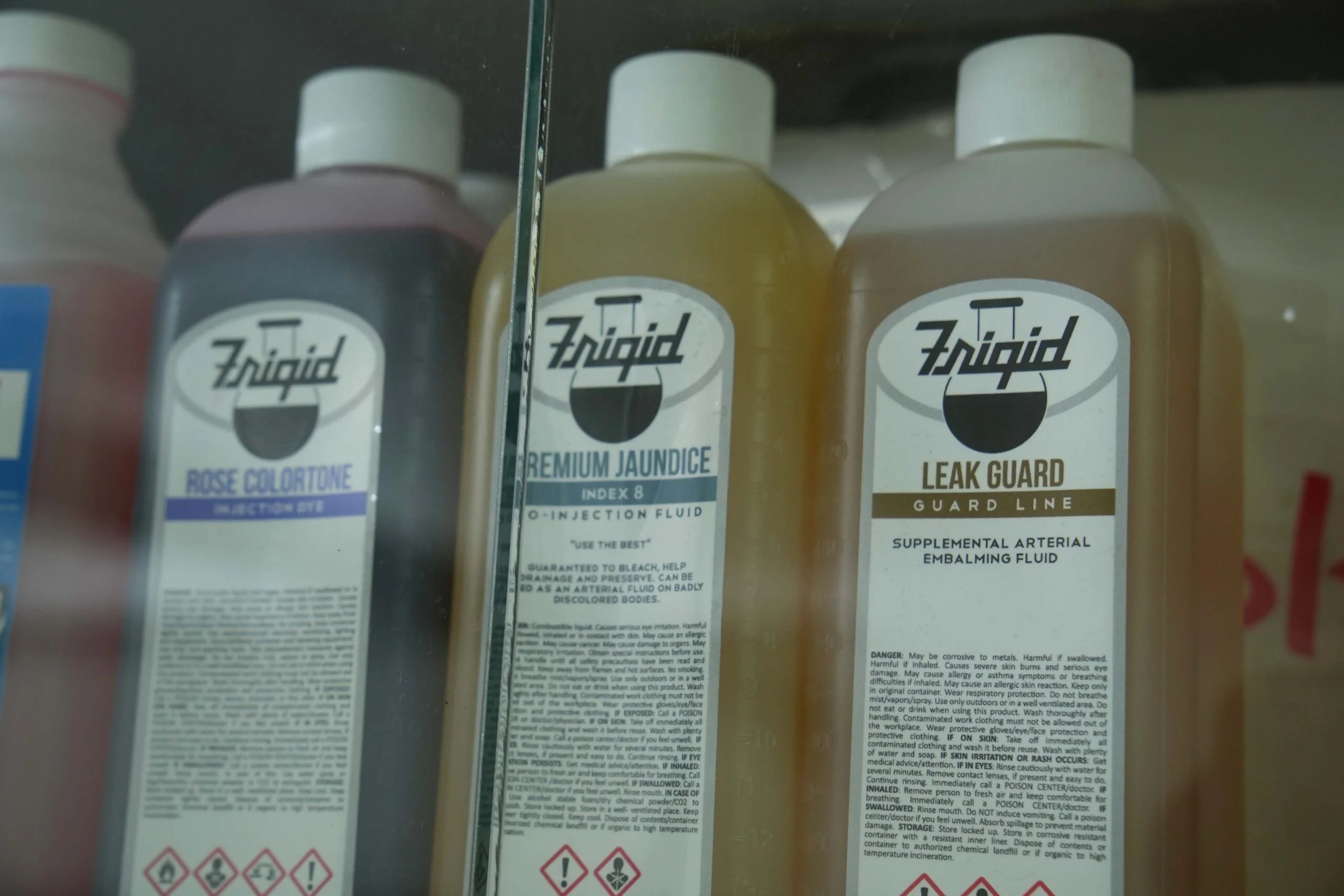
Training in the Philippines uses a relatively small range of tools and chemicals. Cribello estimates that US programs cover 30 to 35 pieces of equipment. “There are very simple kinds and sets of tools that have been used in the past and continue to be taught today here. That much has not changed,” he said.
Many local funeral homes use formalin, an inexpensive solution containing formaldehyde. Some establishments offer soft embalming, which uses other chemicals to achieve a more natural appearance, but the method costs more and may be less suited to local conditions. Filipino wakes can run around the clock for days or weeks, and Ovejera says softer chemicals may not hold up as well in humid weather.
The price difference is substantial. A 200-liter drum of formalin costs about P11,000 to P15,000, according to Ovejera; soft-embalming chemicals can cost 20 times more. That leaves more technical and higher-priced options available at only some funeral homes.
Pay and licensing representation remain open issues
Work is in steady demand, but fair compensation is less certain. Entry-level pay remains around regional minimum wage, which ranges from P401 to P755 per day, according to PCAS and PEAP. Embalmers also receive no hazard pay despite regular exposure to chemicals such as formaldehyde, which the International Agency for Research on Cancer classifies as a Group 1 carcinogen.
Although the 2010 rules set minimum wage as the entry point, smaller funeral homes may pay by the body instead. That arrangement pushes some embalmers to freelance across multiple businesses. Cribello says pay deserves review in comparison with other medical-adjacent professions. “I personally feel that we are behind [compared with] similar professionals like nurses and doctors.”
Ovejera says changing compensation rules would require legislation. “I agree that there must be changes. But how do we do that? It has to be in legislation,” he said.
Embalmers also lack a seat on the committee that licenses them. The DOH-CEUE has five members: a chairperson, vice chairperson, sanitary engineer, pathologist and legal officer. Licensed embalmers help assess oral and practical exams, but are not listed as members of the committee. The board that licenses nurses, by comparison, is made up of nurses.
Workforce figures are difficult to verify
The number of active, licensed embalmers in the country is unclear. The DOH-CEUE has not formally released updated figures in recent years, according to PCAS. PEAP counted about 5,000 licensed embalmers in 2018, but that total included people who had died, moved overseas or allowed their licenses to lapse.
Licensing exams were suspended in 2020 and 2021 during the COVID-19 pandemic. Since they resumed, each exam has licensed roughly 100 people. PEAP estimates the current total at between 6,000 and 6,300, while PCAS puts the number of new embalmers each year at 200 to 300.
The source figures include recent exam results: in March 2026, 75 candidates earned licenses; after the September 2026 written exam, 125 advanced to the oral and practical stage. These figures still don’t establish how many licensed embalmers are currently practicing.
That uncertainty complicates workforce planning as employers in Singapore, Malaysia, the Middle East, Europe and North America seek Filipino embalmers. “Without knowing the actual figures…we don’t even know: do we have enough [at home]?” Ovejera said. The totals also exclude people who embalm without a license, a practice prohibited under DOH rules but reported to persist, particularly in provinces where training is difficult to access.
A profession with a personal stake in its next steps
For Cribello, teaching offers a way to shape professional practice beyond the classroom. He emphasizes hygiene, care for grieving families and sound business practices. He calls embalming “the ultimate noble cause,” and says the work remains fulfilling despite its physical and emotional demands. “I can have a platform where I can influence not just one student, but operators and embalmers all throughout the country,” he said.
Ovejera’s perspective deepened when his father died in 2023 and he helped embalm him. “I wanted to make sure that we do the best for him,” he said. The experience reinforced how the body’s presentation can stay with a grieving family: “The picture of an individual lying there inside the casket…will always be in the cognitive footprint of the family members.”
PEAP has explored adding embalming programs to more Filipino universities, Ovejera said. For now, training remains a short certificate course rather than a degree. The profession has built a wider training pipeline and a stronger collective voice, but its next stage will depend on better workforce figures, more representation in licensing and a clearer path to fair pay. “There’s a lot more work to do… We want to be more globally competitive,” Ovejera said.
Jake Gomez is a 2026-2027 Henry Luce scholar.
Discussion
Sign in to join the discussion.