An Organic Intelligence survey finds many urban Filipinos reject resilience as a default response to hardship, amid thin savings and rising consumer debt.

Resilience as an expectation
Many urban Filipinos are pushing back against the idea that enduring hardship is simply a national virtue. The concern is that “resilience” can shift responsibility onto households and let the institutions meant to protect them off the hook. When coping becomes the expected response to recurring problems, persistence can be praised while the reasons people need to persist go unexamined. That tension runs through the findings of a new study.
In Organic Intelligence’s Pinoy, Kaya Pa Ba? study, released in October, 48% of urban respondents rejected the romanticized narrative of Filipino resilience. Rejection rose to 64% among people aged 18 to 24. It was 59% in Mindanao and 38% in Metro Manila. These figures describe views among the people surveyed; they don’t establish why those views differ by age or region. Still, the gap suggests the resilience narrative doesn’t land the same way across urban communities.
“We are not rejecting resilience per se. What we are rejecting is the necessity of it amid all of these crises. Why is that the default coping?” Jason Ligot, Organic Intelligence’s group account director for development communication and communication design, said at a press briefing on Friday, October 23. His distinction matters: the objection isn’t to people’s capacity to recover, but to treating that capacity as a substitute for support. It’s a pointed question about who is expected to absorb the consequences when crises keep arriving.
“We should be holding government and institutions to account. And then second, why is the onus always on me?” he added. That framing shifts the discussion from individual character to shared responsibility. A person may find ways to get through a difficult period, but that doesn’t settle whether public services or other institutions are doing enough to reduce the strain. The numbers here are underwhelming evidence of how much room households have to absorb it.

High resilience scores, little financial cushion
The survey found an apparent contradiction: respondents facing greater hardship often scored higher on resilience. Mindanao recorded 86 out of 100 on the Resilience Index, compared with 80 in Luzon outside Metro Manila. People aged 45 to 54 scored 87, while respondents aged 18 to 24 scored 77. Lower-income respondents also tended to score higher. Those scores measure reported resilience, though; they don’t show that people have spare money, secure work or a reliable buffer against setbacks.
Ligot suggested that people confronting the toughest circumstances may draw more heavily on their psychological reserves because they have few alternatives. That capacity to persist, though, doesn’t mean households have the resources to absorb another shock. A high score may describe how people respond to pressure, not whether the pressure is manageable. The distinction is easy to lose when resilience is discussed as a national trait.
While 69% of respondents remained optimistic about their finances, 44% said they lacked enough savings to cover three months without work. Another 45% said inflation had drained their motivation to get ahead. These answers can coexist: optimism is an expectation, while savings are a practical buffer. If you're working in this space, the gap between the two is a reminder that confidence alone doesn’t pay essential bills.
The Philippines reached upper-middle-income status in July, but that milestone doesn’t guarantee security for ordinary families. At the Zero Poverty PH 2030 forum on October 16, World Bank economist Sharon Faye Piza warned that economic shocks could push vulnerable households back into poverty. She called for better-paying jobs and stronger social protection. The study’s reported savings figures help explain why the warning matters: households without much room to absorb lost income can be exposed even when broad economic indicators improve. A national milestone and a family’s day-to-day security answer different questions.
Borrowing to cover essentials
Credit is filling some of the gap. The study found that 46% of respondents had taken out a loan in the previous one to two months; 42% of all respondents borrowed for essentials such as food and transportation. That pattern points to borrowing as a way to manage immediate household costs, rather than necessarily as a route to a major purchase. It can solve a short-term cash problem while leaving repayment obligations for later. A bridge, with a price attached.
Banking figures point to the same pressure. Outstanding consumer loans reached P2.84 trillion in August, up 17% year over year, according to the Bangko Sentral ng Pilipinas. Credit card receivables rose 23.8%. These totals show that consumer borrowing is growing, but they don’t identify the reason for every loan or tell us what any one household can afford. Read alongside the survey, they add scale to the concern that credit is part of how people are covering costs.
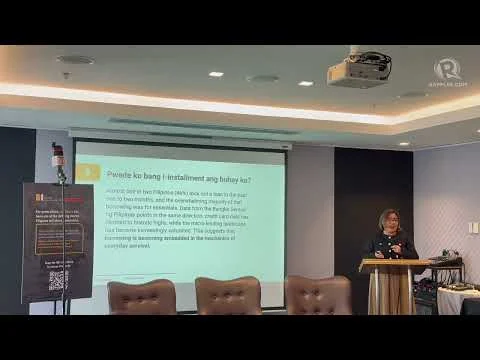
Repayments are showing strain, too. Non-performing consumer loans grew nearly 20% from a year earlier, while bad debt reached 5.67% of all consumer loans, BSP data show. That doesn’t mean every borrower is in trouble, but it does make the expansion of credit harder to read as a simple sign of stronger consumer demand. When borrowing helps cover food or transport, repayment pressure can become another part of the household problem. And yet the available figures don’t tell us which borrowers are most exposed.
What households say would help
The study points to larger needs, including government accountability, relief from household economic pressures and more free public spaces. Those changes take time. Businesses can respond sooner with practical offers: 27% of respondents said a price freeze would make them feel a brand was on their side. Smaller or tingi sizes drew 16%, free shipping 14% and promotional bundles 12%. The preferences suggest that support is judged in part by whether it reduces a cost people face now. A message of solidarity has limited force if the price at checkout keeps rising.
“It has to be tangible,” said Sheila Mangila, Organic Intelligence group account director for marketing intelligence. “It’s about material conditions that will really help them survive the everyday.” For brands, the survey’s message is plain: support earns credibility when it eases the costs people face now. That’s a narrower promise than solving household insecurity, and the distinction matters. A price offer may help with one purchase; it can’t stand in for the broader support respondents say they need.
What the findings suggest
The study presents resilience as both a real capacity and a contested expectation. People can be optimistic, score highly on a resilience index and still lack savings or borrow for basic needs. Those facts don’t cancel one another out. They show why claims about national grit can obscure the conditions households are managing.
Here's the thing: if institutions and businesses want to be seen as responsive, the survey suggests that people will look for practical effects in everyday life. That doesn’t establish what any single policy or offer should be, and the study can’t answer every question about why views differ. It does make a clear point about the limits of praise. When resilience becomes the default answer to hardship, accountability risks disappearing from the conversation (and this is the part most people overlook).
What this means for you depends on which part of the issue you’re watching: household finances, public responsibility or consumer behavior. The findings connect all three, but they don’t turn them into one problem with one fix. The uncomfortable takeaway is simpler. Endurance may help people get through a crisis; it doesn’t show that they should have to keep doing so alone.
The study surveyed 800 Filipinos in urban areas aged 18 to 65 through an online panel in May 2026. Its findings may not fully capture perspectives of rural or digitally disconnected Filipinos.

Discussion
Sign in to join the discussion.