Australian athlete Joanna Wietrzyk has apologized after continuing a race in Beijing despite a medical issue, leading to her withdrawal and forfeiture of points.
Joanna Wietrzyk, an Australian athlete, has publicly apologized following her decision to continue competing in a recent HYROX competition in Beijing despite experiencing a significant medical incident. Initially competing in good health, Wietrzyk faced sudden fecal incontinence during the race but managed to complete the event, ultimately winning. However, the incident quickly went viral, generating widespread discussion on social media.
Public Apology and Reflection
In a heartfelt statement shared across her social media platforms, Wietrzyk expressed her regret for not stepping off the track when the incident occurred. "I felt completely fit and healthy at the start of the race, with no reason to expect any illness," she wrote. This aspect of her statement highlights an important point about athletes' mental states before competitions. Expectations and adrenaline can cloud judgment, leading professionals to underestimate risks or dismiss concerning signs. However, she acknowledged that in hindsight, her decision to continue was a mistake. As a consequence of the incident and its backlash, she has retroactively withdrawn from the race and forfeited all points earned. This withdrawal is not merely procedural but represents a significant admission of responsibility, signaling to her peers that athlete welfare must always come first.

Ms Wietrzyk suffered sudden fecal incontinence mid-race. (Weibo: Beijing Shier)
Incident Goes Viral
The aftermath of Wietrzyk’s decision was quickly amplified by social media, which became a platform for both support and criticism. An incident like this often goes beyond the physical; it raises questions about vulnerability and the pressures athletes face to demonstrate strength and resilience. Social media can be an unforgiving space, and Wietrzyk’s experience showcased the ready availability of judgment and commentary, serving as a startling reminder of the scrutiny athletes are placed under. If you're working in this space, this moment underscores the importance of mental health awareness and support for professional competitors.
In the age of online discourse, this incident served not just as a personal challenge for Wietrzyk but as a broader conversation starter on the realities of athletic life. It’s easy to dismiss such moments as isolated incidents. Yet, more often than not, they underscore systemic issues that athletes endure but seldom publicly address.
Health and Safety Protocols in Spotlight
The HYROX competition format, which combines running and various workout stations, was launched in Germany in 2017, and has gained popularity globally. Following the incident, Wietrzyk’s actions have drawn scrutiny, raising questions about the event's health and safety protocols. There’s often a tension in sports between performance and well-being, and this situation ignites a renewed focus on how organizations balance those priorities. In response, HYROX co-founder Moritz Fürste admitted the organization mishandled the situation, stating the need for immediate intervention during the race was overlooked. His acknowledgment points towards a fundamental misalignment in event planning—one that should have clearly outlined protocols for addressing medical emergencies.
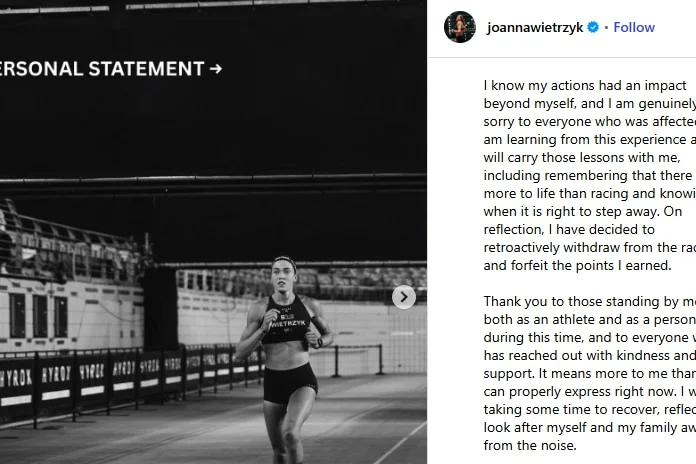
Joanna Wietrzyk shared an apology online on Thursday, withdrawing and handing back points from the race she won. (Instagram: @joannawietrzyk)
Wietrzyk's Impact and Lessons Learned
Wietrzyk’s public apology included sentiments directed towards her fellow competitors, spectators, and HYROX organizers, reflecting on the broader implications of her actions. "I know my actions had an impact beyond myself, and I am genuinely sorry to everyone who was affected," she mentioned. This call for accountability reflects a deeper understanding of the ripple effect an athlete's actions can create. It’s a noteworthy perspective, especially given the often solitary nature of competitive sports. Furthermore, she noted that she has gained valuable lessons from this experience, highlighting the importance of knowing when to prioritize health over competitive spirit. This isn't a lesson that only athletes need to consider; it could have significant implications for trainers, coaches, and medical staff in competitive scenarios.
Rule Changes Following Backlash
The fallout from this incident has prompted HYROX to reassess its health regulations. Following Fürste’s admission of fault, the organization announced updates to their event procedures to ensure safety in future competitions. New rules will allow Race Directors to withdraw athletes from the course for medical reasons, particularly when health risks may impact other competitors. This shift reflects a necessary rethinking in the sports community regarding athlete care protocols, which, historically, have often lagged behind competitor realities.
Before these adjustments, competitors faced penalties for behaviors such as spitting or clearing their nostrils on the course, which many perceived as inconsistent given the severity of Wietrzyk’s situation. That said, athletes often navigate a maze of stringent regulations that can prioritize the image of sports over practitioners' health. The introduction of these measures indicates a shift in response to athlete welfare concerns, reflecting a growing awareness that health should take precedence over competition. This move could serve as a wake-up call for similar events worldwide, where the conversation surrounding athlete health continues to grow. If more organizations follow suit, the implications could be profound, enhancing protocols to foster better environments for competitors.
The Future of Competition and Athlete Welfare
This incident serves as a pivot point for discussions on athlete health in high-pressure environments. As Wietrzyk's experience reverberates throughout the sports community, there's an emerging narrative that champions health first and foremost. In a competitive atmosphere where pushing limits is glorified, this new emphasis on athlete wellness might reshape future athletes' experiences. Organizations might become more proactive in preventing health risks, transcending traditional competitive norms. The larger implication here is a cultural shift that challenges the idea that weakness lies in stepping back when health is compromised. It’s a significant turning point that could lead to deeper systemic changes, promoting a model that values human well-being over medals or points.
Discussion
Sign in to join the discussion.