Eric Bauza voiced generations of Looney Tunes characters and earned three Children’s and Family Emmy Awards during a career spanning more than 25 years.
A sudden loss for animation
Eric Bauza helped carry the Looney Tunes legacy into a new generation, taking on characters made famous by Mel Blanc. The Filipino-Canadian voice actor died suddenly on Sunday, October 25, at 46, his family announced in an Instagram statement. The news marks the loss of a performer whose work reached audiences through familiar characters, but also through a wide range of films, television series and games.
Voice actors can become closely associated with characters whose fame predates their own careers. That asks for a balance: preserve the recognizable qualities audiences expect while making the performance feel present rather than imitative. Bauza’s career was built around that challenge, especially in the Looney Tunes roles that had long been identified with Blanc.
A career built on character voices
Born in Scarborough, Ontario, on December 7, 1979, Bauza grew up watching and imitating Looney Tunes. That early familiarity became the foundation for work spanning characters with distinct rhythms and comic personalities. He went on to voice Bugs Bunny, Daffy Duck, Tweety, Porky Pig, Elmer Fudd, Foghorn Leghorn and Road Runner, among many others. The range matters: these roles rely on sharply different vocal choices, from deadpan timing to exaggerated bluster.
Taking over an established character carries a particular burden. The audience already knows what the voice should feel like, and a performance that strays too far can disrupt the joke; one that merely copies can sound lifeless. Bauza’s contribution was to keep the characters legible across new productions and formats, giving viewers a route into cartoons whose histories stretch well beyond any one performer. A long handoff, handled in the studio.
His work extended across film, television and video games, with more than 400 acting credits over a career of more than 25 years. His projects included The Adventures of Puss in Boots, Teen Titans Go!, Ben 10, Space Jam: A New Legacy and The Super Mario Bros. Movie. The list shows how voice performance moves between established franchises and newer productions, often asking the same actor to serve very different audiences. Bauza received three Children’s and Family Emmy Awards for voice performance between 2022 and 2025, recognition that put a formal marker on a career already measured in sheer breadth.
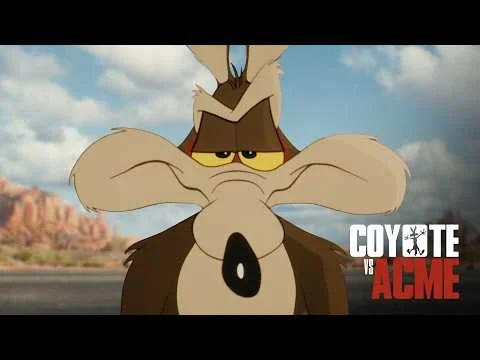
Bauza’s final work before his death was Coyote vs. Acme, in which he voiced Wile E. Coyote. The Dave Green-directed comedy premiered in August 2026. That role brought him back to the broad physical comedy and visual absurdity associated with the Warner Bros. characters he’d helped sustain, while giving audiences another performance to encounter in the context of his career.
Comedy across cultures
In a 2021 NBC News interview, Bauza described the broad reach of the cartoons: “Looney Tunes transcends all languages and all cultures. It doesn’t matter what part of the planet you’re from. You get the comedy.” The remark speaks to a durable feature of visual comedy: much of its meaning comes through timing, expression and physical action, so it can travel even when dialogue doesn’t. That doesn’t make the work culturally neutral, but it helps explain why these characters have remained familiar across generations and audiences.
Warner Bros. Television Group chair Channing Dungey honored Bauza in a statement reported by The Hollywood Reporter, saying he brought “joy and laughter to millions around the world.” Dungey also recognized Bauza’s 15 years with Warner Bros. animation and his place in a line of performers that included Mel Blanc. The tribute reflects both his individual work and the company’s reliance on performers who can keep legacy characters active in new productions.
What his work leaves behind
Bauza’s career points to a less visible part of animation’s continuity: audiences may recognize the character instantly while rarely thinking about the performer responsible for its voice. That distance can make voice acting seem secondary, even though vocal timing and tone are central to how a joke lands. The numbers here are underwhelming as a measure of the work; a credit count can’t capture the precision needed to make a familiar character sound right in a new scene.
If you’re working in animation, the practical lesson is plain: a franchise’s longevity depends on people who can interpret its past while serving the story in front of them. Bauza’s roles crossed generations and formats, and his performances offered a living connection between classic cartoon identities and newer viewers. Here’s the thing: continuity takes craft, even when the audience sees only the character.
Across hundreds of roles, Bauza made familiar animated characters sound at home for a new audience. His work leaves a long record of performances connecting classic cartoon comedy with viewers worldwide. That legacy will be heard whenever those characters return to the screen.
Discussion
Sign in to join the discussion.