Zelenskyy pressed US officials over Patriot missiles and Starshield access as Washington denied deliberately withholding support and Russian attacks killed at least seven.
A dispute over support and diplomacy
The dispute over US military support has become a test of Kyiv’s relationship with Washington, even as Russian attacks continue to kill civilians and damage infrastructure. Ukrainian President Volodymyr Zelenskyy met senior US envoys in Norway on Tuesday, seeking progress on missile deliveries, intelligence and satellite access. Those requests concern different parts of Ukraine’s ability to anticipate and respond to attacks, but they’ve converged in one difficult question: how much practical support can Kyiv count on from the United States, and on what terms?
Norwegian Prime Minister Jonas Gahr Store said the talks involved Zelenskyy, US envoy Steve Witkoff, Finnish President Alexander Stubb and Jared Kushner, who joined remotely. Store said the goal was to put diplomatic efforts on “a more constructive path.” The description signals an effort to keep negotiations open, though it doesn’t indicate that the participants reached agreement on weapons, intelligence or the broader direction of US policy.
The meeting comes amid a widening rift between Kyiv and the Trump administration. Tensions have grown after President Donald Trump partially lifted sanctions to pursue a diesel supply deal with Russian President Vladimir Putin, and criticized Zelenskyy over Ukrainian attacks on Russian oil refineries. For Kyiv, that combination adds political strain to an already urgent military relationship: the United States remains central to several forms of support Ukraine says it needs, while Washington is pursuing its own priorities in dealings with Moscow.
Kyiv challenges US account of support
Zelenskyy says delays and gaps in US support have left Ukraine more exposed. He told US senators on Monday that the Pentagon was holding up Patriot interceptor missiles already paid for by European countries, with the shipment awaiting Defence Secretary Pete Hegseth’s signature. Several European governments, he said, were also waiting for US approval to transfer missiles from their own stockpiles. His account points to a practical complication in military aid: a country can pay for equipment or offer weapons from its reserves, yet delivery may still depend on decisions made in Washington.
The claims also show why Kyiv’s frustration is directed at more than the volume of US assistance. Timing matters when the weapons in question are intended to intercept incoming missiles, and approval matters when other countries want to move equipment they already hold. Zelenskyy’s account describes these as delays in decisions and transfers. The available statements don’t establish how long the process has taken or what specific operational effects the delays have had.
He has separately accused Washington of withholding intelligence. On Monday, Zelenskyy said Ukraine received no advance warning of major Russian missile strikes targeting energy facilities in the Kyiv region. The US has denied changing its intelligence sharing with Ukraine. That leaves a sharp disagreement over what information was shared and when, without a public explanation here that resolves the competing accounts.
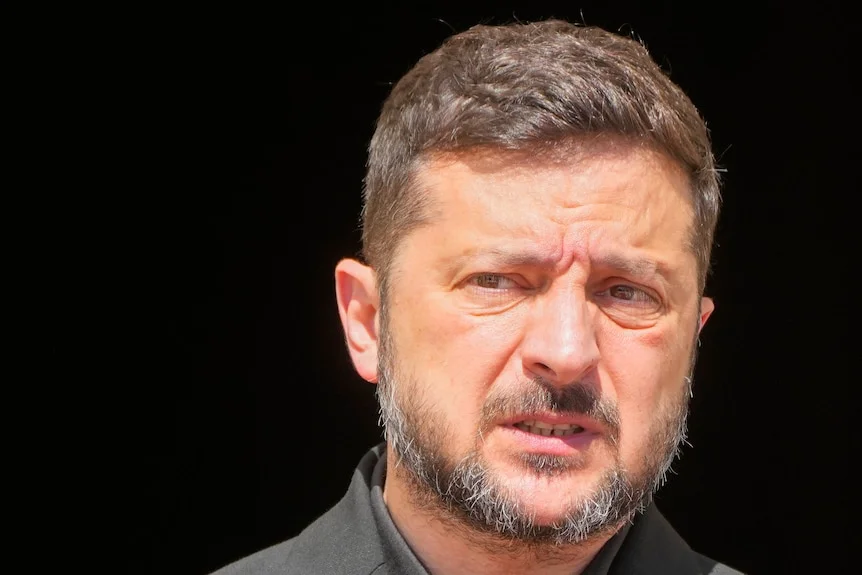
Ukraine's President Volodymyr Zelenskyy is accusing the US of limiting his country's ability to defend against Russian strikes. (AP: Efrem Lukatsky)
Before the Norway meeting, Zelenskyy described his discussion with US Secretary of State Marco Rubio as “substantive” and “constructive.” He said Ukraine’s access to the US military satellite network Starshield “needs to be restored” and called for ballistic missile interceptors to protect lives. Together, those requests underline how Ukraine’s defense depends on several kinds of assistance, from warning and communications to systems designed to counter missile attacks.
Rubio, speaking during a visit to India, rejected the accusation that Washington was deliberately withholding supplies. “There's nothing being deliberately denied to Ukraine,” he said, describing the allocation of equipment as a balance between commitments to other partners and US military needs. That response frames the dispute as one of competing demands on US resources rather than a decision to punish Kyiv. It doesn’t answer Zelenskyy’s specific claims about approvals and delays.
Trump has also denied ordering a slowdown of Starshield service for Ukraine. SpaceX developed the network, and its owner, Elon Musk, said such an order could only have come from the White House. The differing statements leave the status of service and responsibility for any change contested in the accounts provided. For a government relying on satellite access during a war, uncertainty about who controls that access can itself complicate planning.
Russian attacks hit cities and infrastructure
The diplomatic dispute unfolded as Russian strikes caused power outages in nearly half of Ukraine’s regions. At least seven people were reported killed across the country on Tuesday. The scale of the reported disruption gives the talks an immediate backdrop: requests for interceptors and intelligence are being made while attacks are affecting both civilian safety and essential infrastructure.
Ukraine’s prosecutors said a Russian drone strike in Chabany, near Kyiv, killed three people and wounded four. The town lies beside the M05 highway connecting the capital with Odesa. Authorities had earlier reported at least four other deaths in attacks elsewhere in Ukraine. These reports describe a day of casualties across multiple locations, though the information provided doesn’t specify the full extent of damage or identify every target.
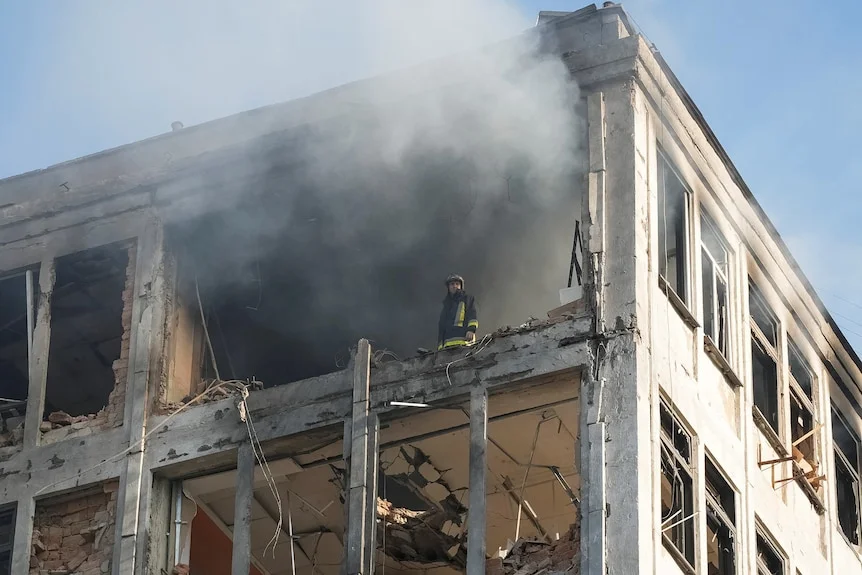
Russian strikes are continuing to pound Kyiv and other major Ukrainian cities ahead of winter. (Reuters: Oleg Pereverzev)
Russia’s Defence Ministry said its forces struck logistics centers, port infrastructure and three cargo ships in the port of Reni, in the Odesa region. It also reported a strike on a bulk carrier at sea en route to Odesa. The ministry did not immediately comment on the reported attacks that killed civilians. Its account describes targets it says were struck, but does not address the civilian deaths cited by Ukrainian authorities.
What the dispute means for the talks
US-led efforts to end the war have stalled in recent months as Washington’s attention has shifted toward the conflict with Iran. The Norway talks put the immediate strain on the US-Ukraine relationship into focus: Kyiv is asking for the tools to blunt Russian attacks while Washington says it must balance Ukraine’s needs with other commitments. That gap is more significant than it looks. Even when both sides say diplomacy should continue, disagreement over the status of weapons, intelligence and satellite access can make it harder to build confidence in the process.
For Kyiv, the central test is whether diplomatic engagement produces clear decisions on the support it says it needs. For Washington, the challenge described by Rubio is how to manage competing military requirements while maintaining its commitments. Neither side’s public statements settle how those choices will be resolved. Here's the thing: the Norway meeting matters as a measure of whether the two governments can discuss those differences directly, but the statements so far offer no evidence that the underlying disputes have been settled.
If you're working in this space, the distinction between a promised commitment and an approved transfer is worth watching. The same applies to intelligence and satellite access, where public claims about availability may not reveal the operational details. And yet, the immediate human cost is plain in the reported deaths and power outages. No diplomatic phrasing can make that urgency abstract.
AFP/AP
Discussion
Sign in to join the discussion.